
How Pergolas Enable Passive Cooling and Energy-Efficient Buildings https://www.hooeasy.com/pergola/
Europe’s “New Normal”: A Climate That Demands Better Design https://www.hooeasy.com/awnings/
Across Europe, climate patterns are shifting in ways that are increasingly visible to businesses, cities, and property owners. Heatwaves are occurring more frequently. Sunlight is stronger and more prolonged during summer months. Episodes of extreme rainfall and high winds are becoming less predictable.https://www.hooeasy.com/carport/
This is not a temporary fluctuation. It is the New normal.
Importantly, this shift does not require panic—it requires adaptation. Climate change has moved from being a long-term forecast to a present-day design condition. For the building industry, it is now a structural Design challenge: how can buildings maintain comfort in hotter conditions without continuously increasing energy consumption?
The conversation is no longer about short-term fixes. It is about Long-term resilience—how buildings can perform reliably, efficiently, and sustainably over decades.
The Growing Challenge: Rising Heat Load and Energy Demand
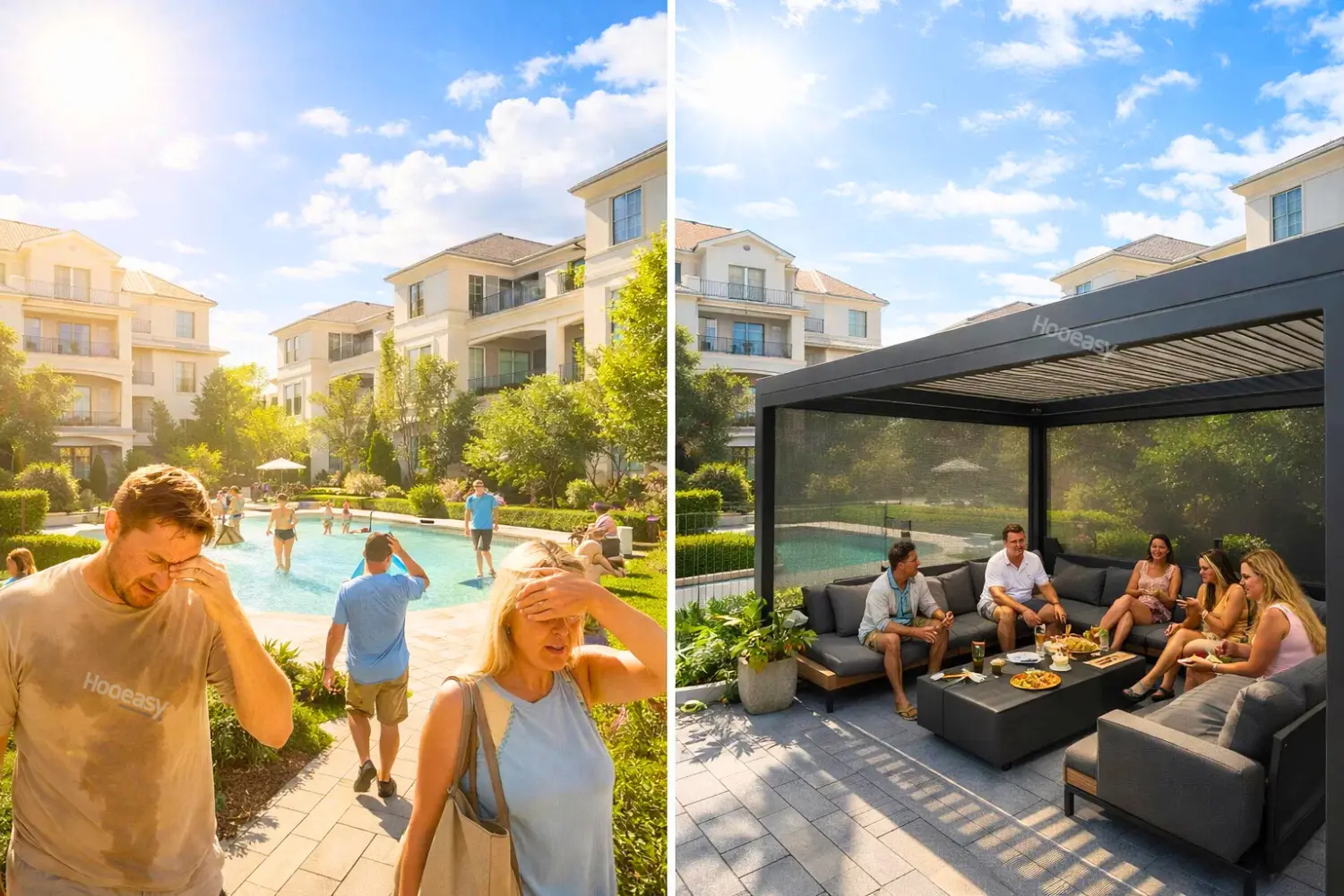
Modern architectural trends—large glass façades, open terraces, transparent exteriors—have enhanced aesthetics and natural light. However, they have also amplified Solar gain, the process by which buildings absorb heat from direct sunlight.
As temperatures rise, unmanaged solar exposure leads to overheating. Indoor environments struggle to maintain Thermal comfort, and cooling systems are forced to compensate. The immediate response is often to increase reliance on air conditioning.
Yet this creates a cycle:
- Higher electricity consumption
- Increased operating costs
- Greater pressure to meet sustainability targets
- Strain on power infrastructure during Energy demand peaks
During heatwaves, electricity grids across Europe experience significant stress due to cooling loads. For commercial properties, this means higher operational risk and escalating costs. For developers and architects, it reinforces the urgency of rethinking building performance.
The real question becomes: instead of cooling overheated buildings, how can we prevent overheating in the first place?
Why Passive Cooling Is Becoming Europe’s Preferred Strategy
The contrast between active and passive systems is increasingly clear.
Active systems—air conditioners, chillers, mechanical ventilation—consume energy continuously. They are reactive solutions. Passive design strategies, such as shading and natural ventilation, are preventive. They reduce heat accumulation before it becomes a problem.
Passive cooling offers several long-term advantages:
- It does not rely on continuous energy input.
- It remains effective over decades.
- It delivers stable and predictable performance.
- It reduces operational vulnerability during extreme weather.
This shift aligns with broader energy-efficiency ambitions across the European Union, where long-term building performance and carbon reduction have become central priorities. While regulations evolve, the direction is consistent: buildings must achieve higher performance with lower energy consumption.
Passive strategies are no longer optional enhancements—they are fundamental design principles.
How Pergolas Become Part of a Passive Cooling System
Among external architectural solutions, pergolas have evolved into powerful tools for passive thermal control. Companies like Hooeasy (https://www.hooeasy.com/
), specializing in awnings and pergolas, are increasingly integrating shading systems into sustainable building strategies rather than treating them as decorative add-ons.
Reducing Direct Sunlight and Lowering Heat Load
A pergola acts as an architectural buffer between the sun and the building envelope. Instead of allowing sunlight to strike glass façades directly, the structure provides External shading, intercepting solar radiation before it penetrates the interior.
This is a critical distinction. Once heat enters a building, it is costly to remove. Effective Solar control occurs outside the building, where radiation can be filtered, diffused, or blocked.
By reducing direct exposure on façades and glazed surfaces, pergolas:
- Minimize surface heat accumulation
- Lower interior temperatures
- Reduce cooling loads
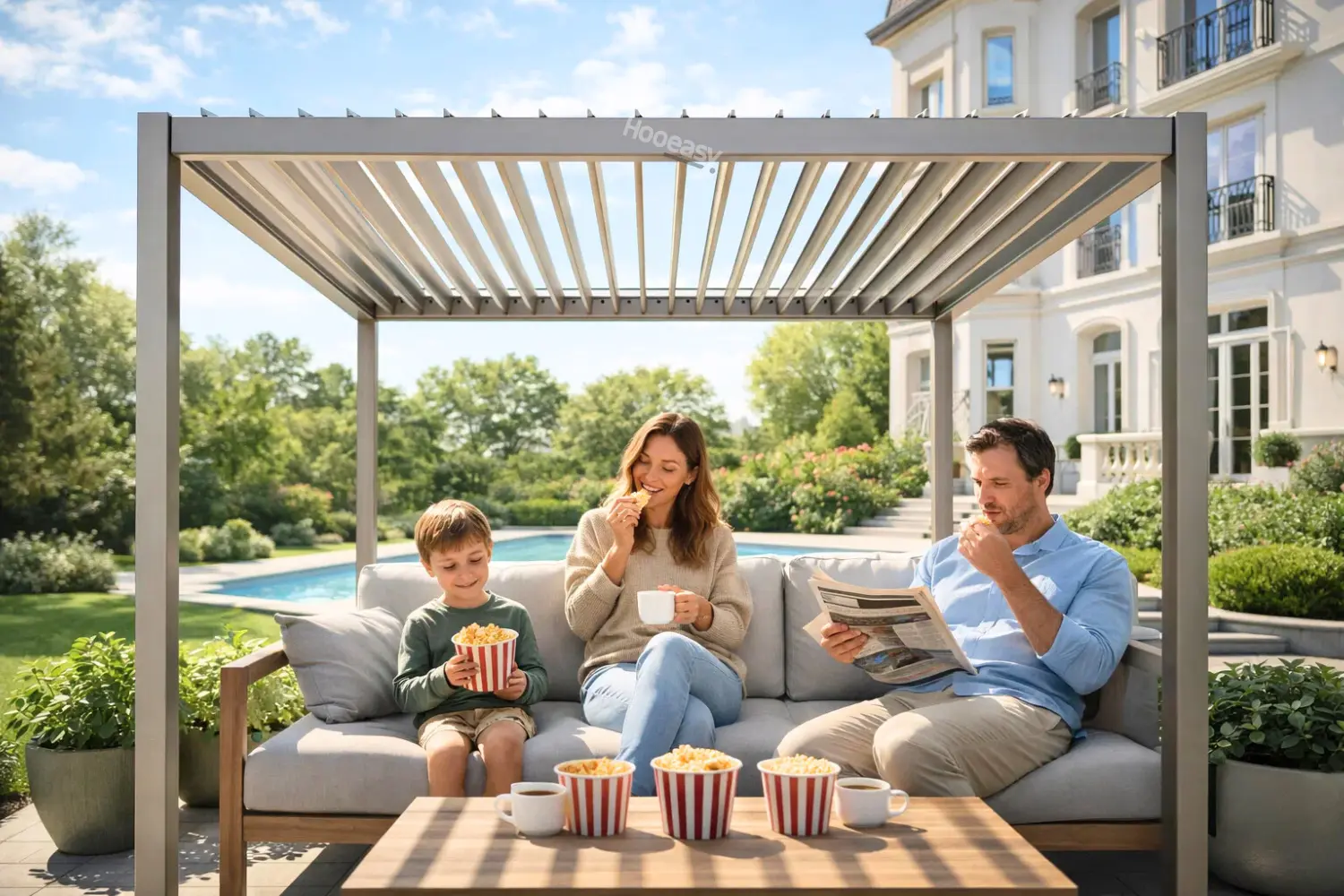
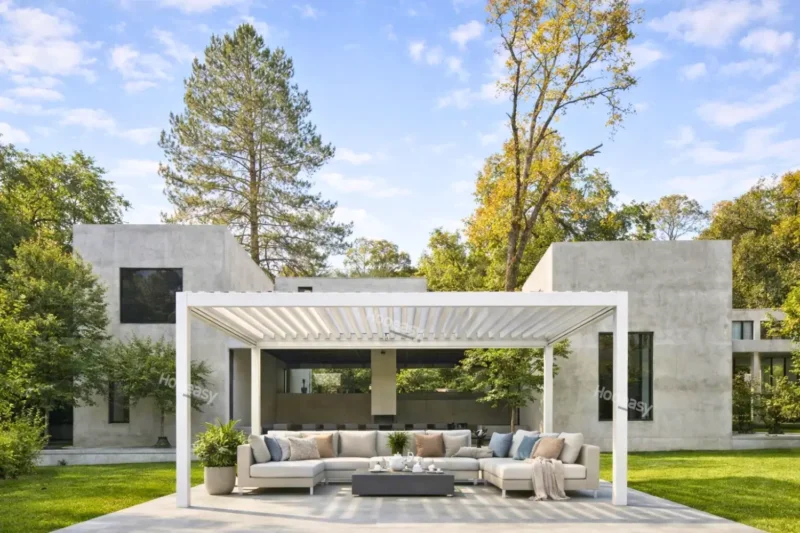
 Commercial Pergola Supporting Passive Cooling in a Modern BuildingEnhancing Thermal Comfort in Outdoor and Semi-Outdoor SpacesCommercial architecture is expanding beyond interior square meters. Restaurants, hotels, offices, and retail environments increasingly rely on terraces, outdoor seating areas, and semi-open collaboration zones.Without protection, these spaces become unusable during intense heat. Pergolas extend the Extended usability of outdoor spaces by creating shaded microclimates that reduce surface temperatures and glare.
This not only improves Thermal comfort, but also increases the functional value of commercial real estate. A shaded terrace can operate during summer lunch hours. A semi-outdoor office lounge can remain productive even in peak heat.
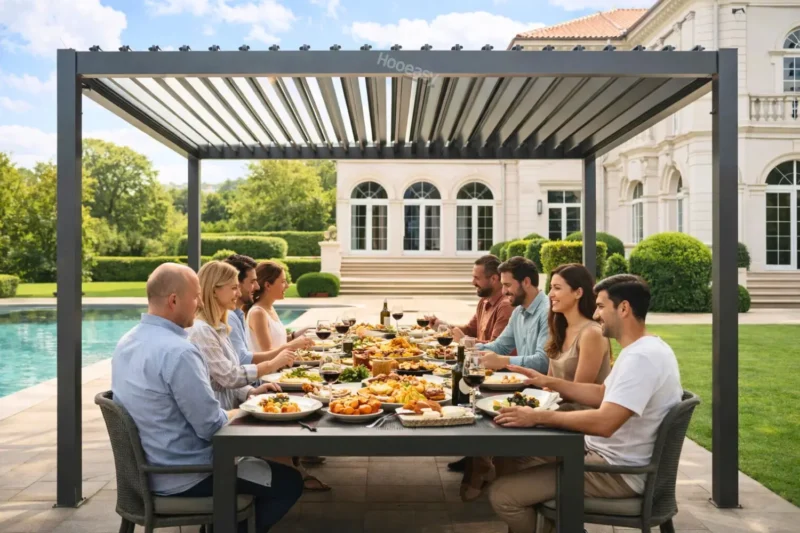
Shaded restaurant terrace under pergola improving outdoor comfort during hot weatherReducing Dependence on Active Cooling SystemsThe logic is straightforward:
Shading → Reduced heat gain → Lower interior temperatures → Shorter air-conditioning cycles.
Over time, this reduction in cooling demand translates into measurable benefits:
- Lower operational energy consumption
- Reduced maintenance strain on HVAC systems
- Smaller building lifecycle carbon footprint
For property owners and developers, pergolas become not just design elements but performance assets.
Supporting Climate-Adaptive Design in Extreme Conditions
Modern pergolas differ significantly from basic awnings. Advanced systems incorporate adjustable louvers that respond to changing sun angles, allowing dynamic shading throughout the day.
These features contribute to Climate-adaptive design:
- Adjustable louvers optimize shading based on seasonal solar paths.
- Robust aluminum structures withstand wind and heavy rain.
- Modular configurations enable maintenance and future upgrades.
Such adaptability reinforces Long-term resilience. Buildings are no longer static objects—they are responsive systems designed to perform under evolving environmental conditions.
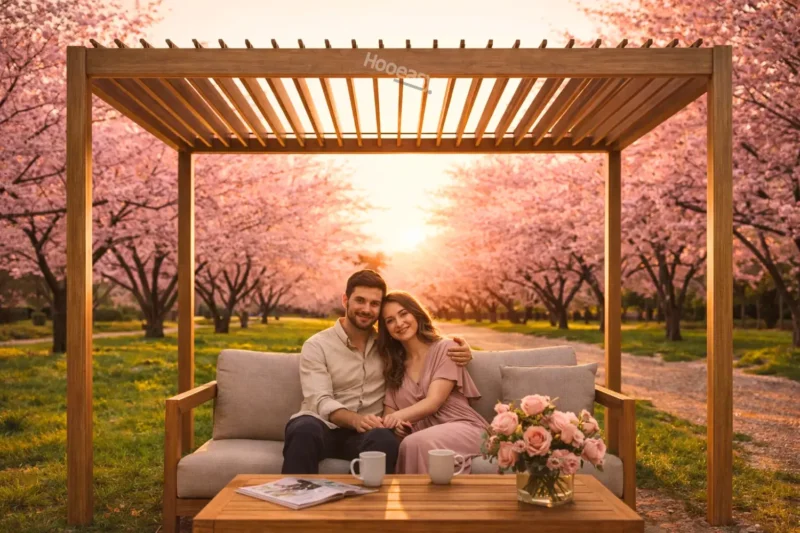
Adjustable louver pergola demonstrating climate-adaptive solar control The Long-Term Value of Pergolas in Sustainable Architecture
Sustainability is not only about materials — but about how long and how well a structure performs.
From a lifecycle perspective, durable pergola systems provide:
- Extended service life with minimal replacement
- Lower material waste due to maintenance-friendly design
- Consistent structural performance over time
For B2B decision-makers, this means predictable ROI and reduced lifecycle environmental impact. Durable awnings and pergolas, such as those offered by Hooeasy, align performance, aesthetics, and sustainability into a single architectural strategy.
Rather than being an accessory, a pergola becomes part of the building’s environmental logic.
From Climate Response to Better Building Experience
Pergolas are not the singular solution to climate change. However, they represent a rational and forward-thinking architectural response.
They embody:
- Smarter design that reduces heat before it becomes a problem
- Long-term thinking that values durability and performance
- Practical support for Climate-resilient buildings
As Europe continues adapting to a hotter future, the buildings that succeed will not be those that consume the most energy—but those that manage it most intelligently.
Designing for resilience does not require radical reinvention. Sometimes, it requires integrating well-engineered shading systems into the core of architectural planning.
In a hotter world, passive strategies are not optional upgrades. They are foundational decisions that shape the future of sustainable construction.
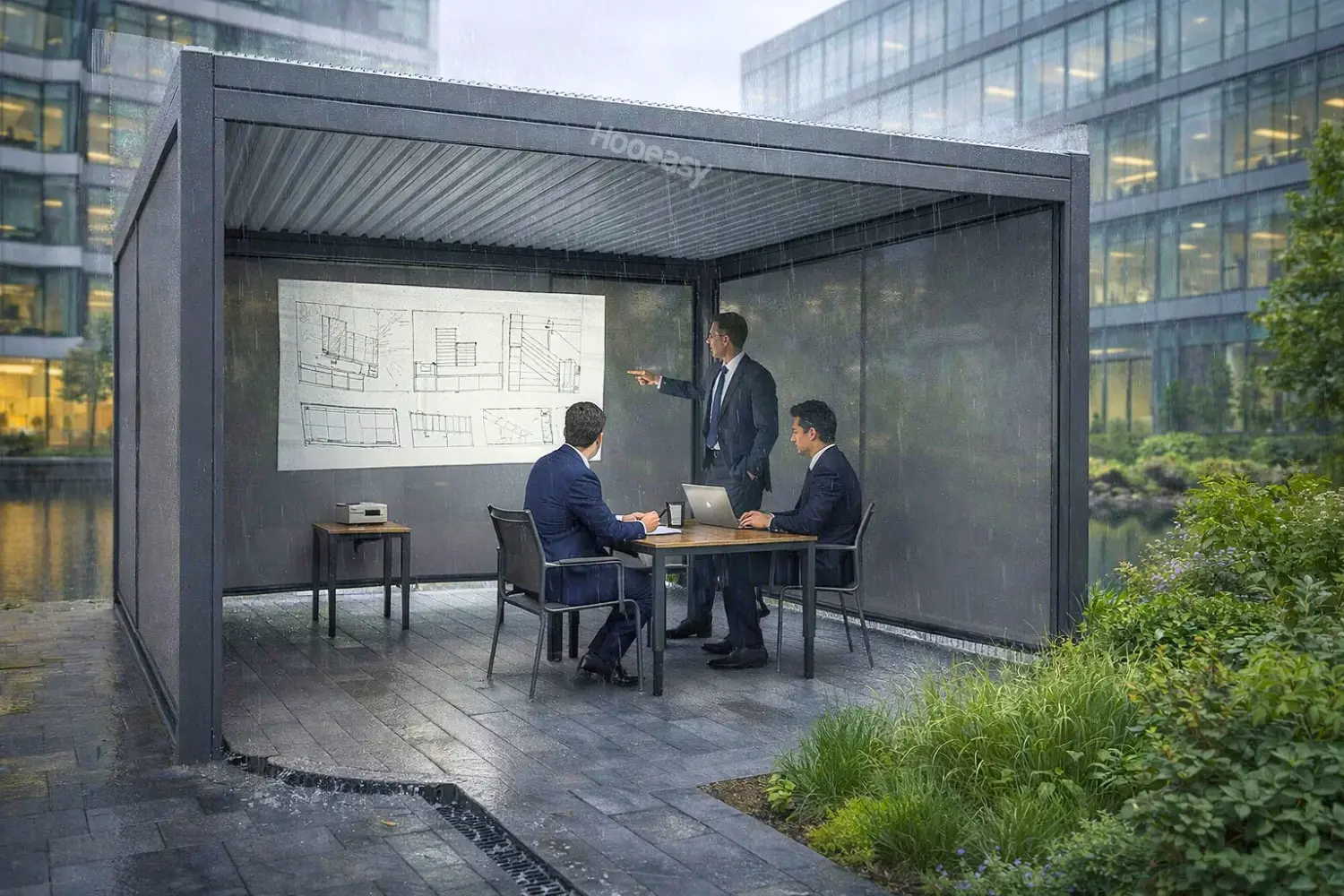 Commercial Pergola Supporting Passive Cooling in a Modern BuildingEnhancing Thermal Comfort in Outdoor and Semi-Outdoor SpacesCommercial architecture is expanding beyond interior square meters. Restaurants, hotels, offices, and retail environments increasingly rely on terraces, outdoor seating areas, and semi-open collaboration zones.Without protection, these spaces become unusable during intense heat. Pergolas extend the Extended usability of outdoor spaces by creating shaded microclimates that reduce surface temperatures and glare.
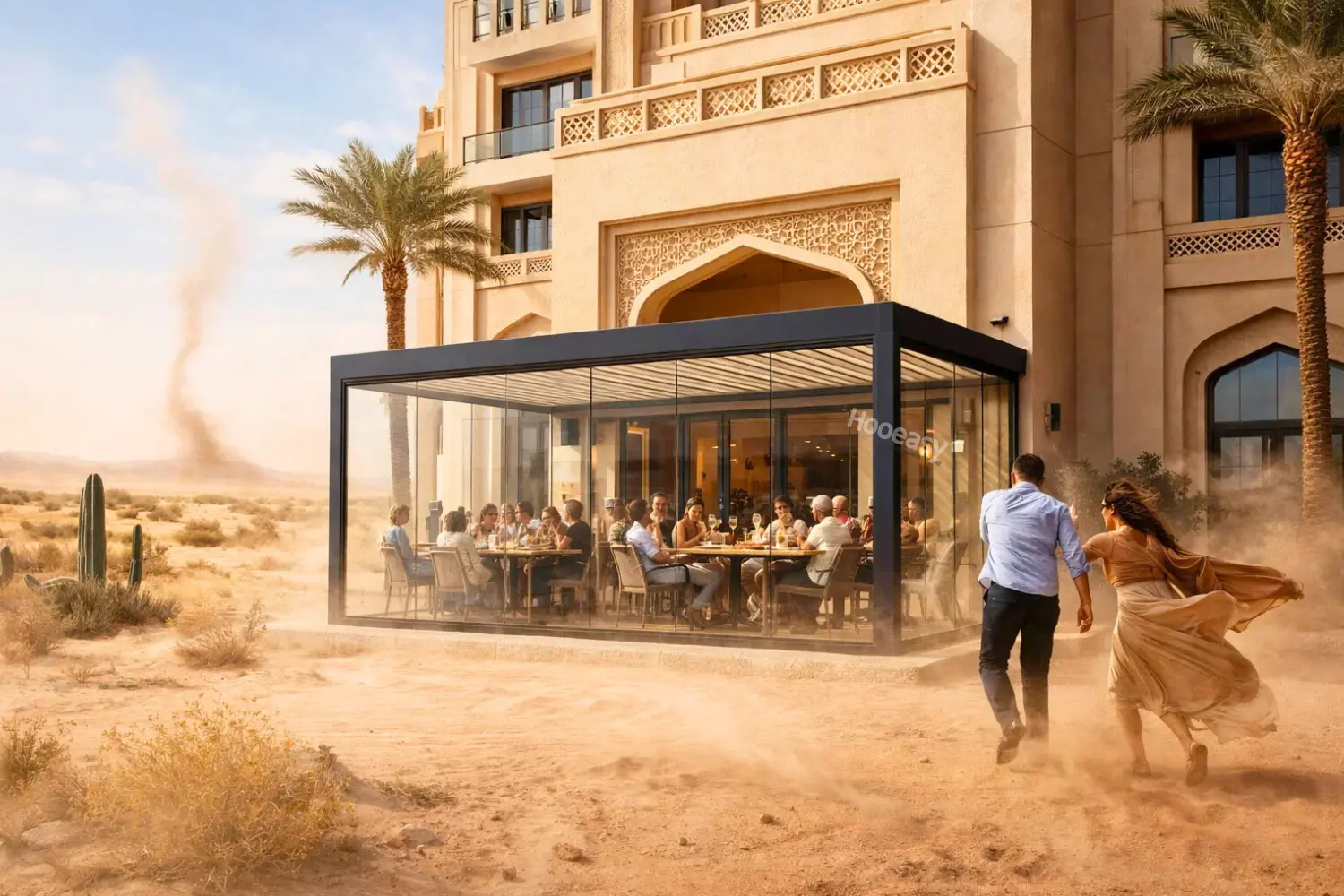 Shaded restaurant terrace under pergola improving outdoor comfort during hot weatherReducing Dependence on Active Cooling Systems