
Subtitle: How pergola Defines Space, Experience, and Value https://www.hooeasy.com/pergolas/
For architects, builders, developers, and B2B procurement specialists, specifying outdoor structures is more than a product selection—it’s a foundational design decision that shapes human experience. Among these elements, the pergola stands apart. It is not merely an accessory but a fundamental architectural tool for defining space, modulating climate, and creating lasting value. This exploration positions the pergola within its architectural context, tracing its evolution and highlighting its critical role in contemporary design. https://www.hooeasy.com/awnings/

- The-Elegant-Features-of-Hooeasy-Companys-Pergola-Products
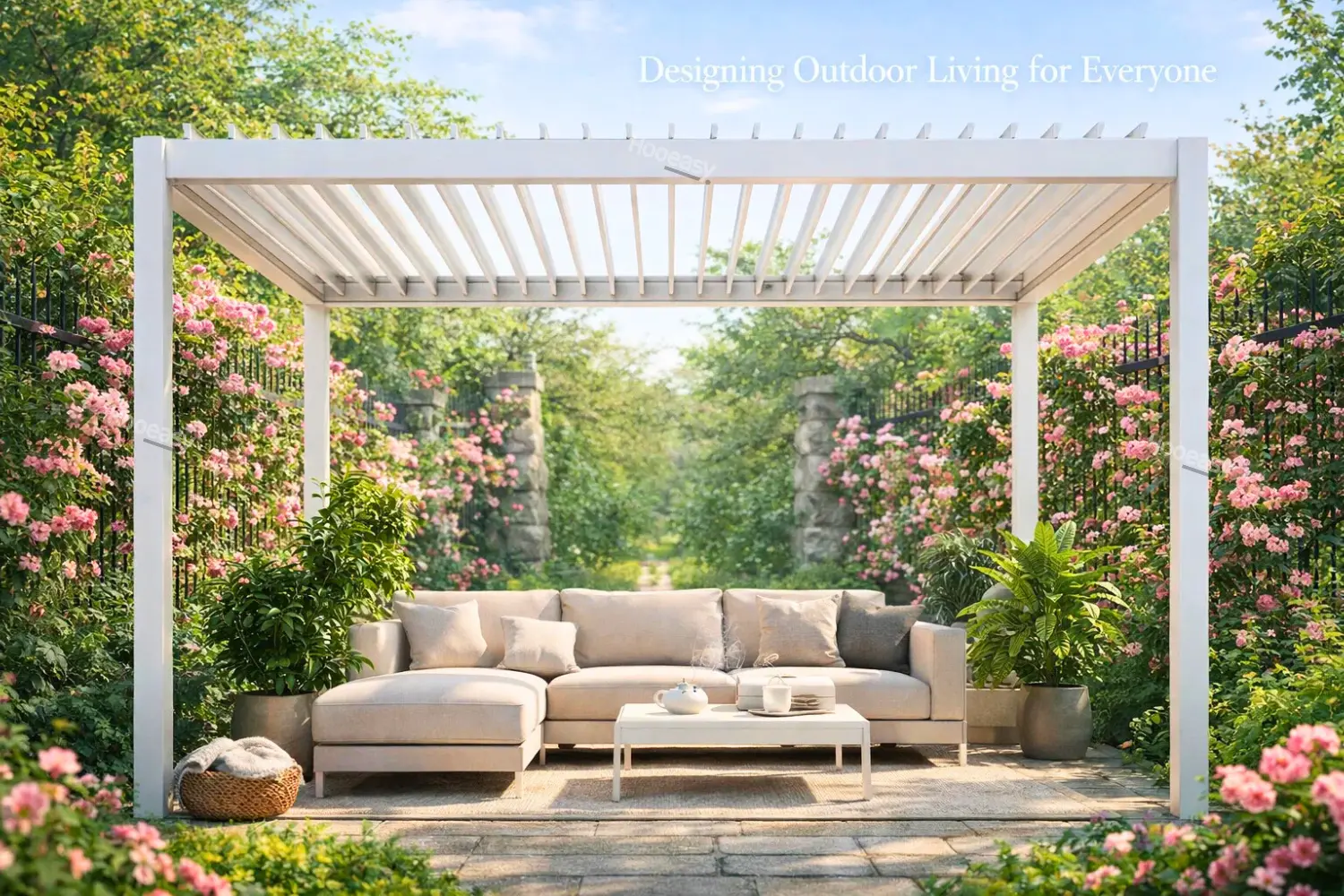
- Defining the Architectural Pergola https://www.hooeasy.com/contact/
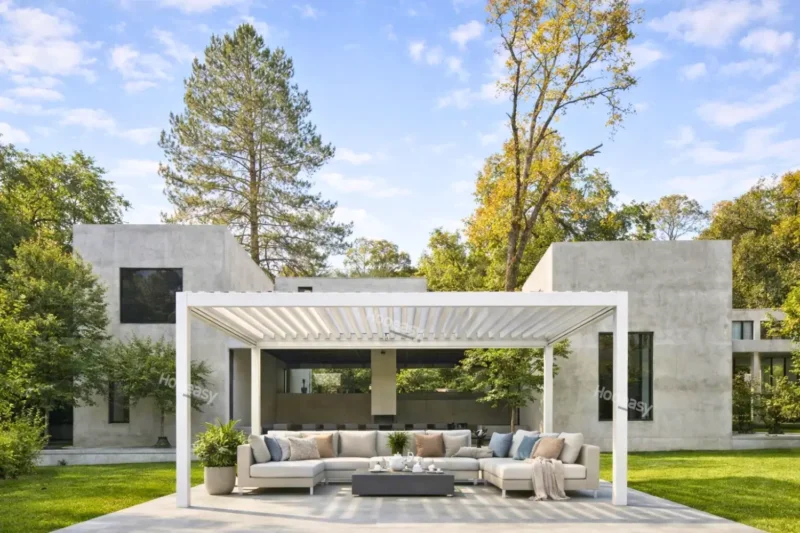
In architectural terms, a pergola is a semi-open structure composed of vertical posts that support an open or operable roof framework of beams and rafters. Its primary function is to define an outdoor volume—to create a “room without walls”—rather than to fully enclose it. It establishes spatial order, rhythm, and a transitional threshold that masterfully blends built form with landscape. It is architecture’s framework for the sky.
- A Brief Architectural Heritage
The pergola’s lineage is deep-rooted. We see its precursors in the shaded walkways (xysti) of Roman gardens and the verdant, vine-covered corridors of Renaissance Italian villas. This evolution from decorative garden feature to purposeful architectural extension marks its journey into modernity. Today, it has transcended ornament to become an essential component for residential and commercial projects, shaping how we inhabit transitional spaces.
- Core Architectural Elements
A pergola’s design integrity lies in its components:
- Structural Frame: The posts and beams define its scale, proportion, and load-bearing capacity. The choice between robust, squared profiles or slender columns directly impacts its visual weight and architectural language.
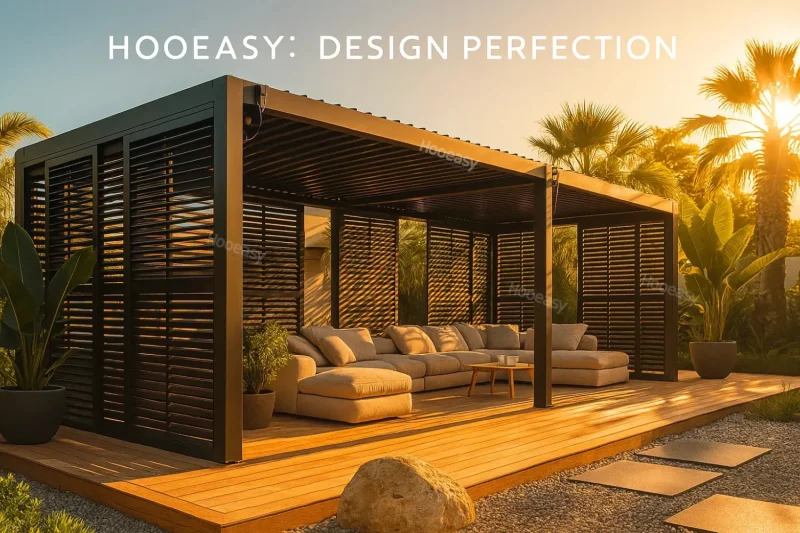
- Roof System: This is where functionality evolves. Beyond simple open lattices, modern systems include adjustable aluminum louvers or retractable fabric canopies, allowing dynamic control over light and shade.
- Materiality: Traditional wood offers warmth but requires maintenance. Modern architecture often turns to aluminum pergola manufacturers for powder-coated, rust-free durability, or to steel for dramatic, structural spans. Selecting a reputable pergola factory or pergola supplier in China like Hooeasy becomes crucial for consistent quality in these materials.
- Integration: Pergolas can be structurally embedded into a building’s facade for a seamless flow or designed as elegant, freestanding sculptures within a landscape.
- Functional Positioning in Architecture
Beyond aesthetics, a pergola serves critical functions:
- Spatial Zoning: It clearly demarcates dining, lounge, or entry areas without visual barriers.
- Climate Modulation: It provides filtered shade, permits passive ventilation, and, with operable roofs, offers adjustable protection from sun and light rain.
- Utility Platform: It acts as a backbone for integrated lighting, heating, shading screens, and audio systems, transforming a patch of yard into a fully functional outdoor room.
- Architectural Distinctions: Pergola vs. Other Structures
Clarity in terminology ensures precise design intent:
- Pergola vs. Gazebo: A gazebo is a fully roofed, often enclosed pavilion, usually freestanding and focal. Gazebo pergola exporters may offer hybrids, but the core distinction is the degree of enclosure.
- Pergola vs. Pavilion: Similar to a gazebo, a pavilion is typically a larger, more permanent solid-roofed structure.
- Pergola vs. Awning: An awning is a secondary attached cover, often fabric-based, lacking the structural, spatial-defining presence of a pergola. Companies like Hooeasy, which master both awnings and pergolas, understand this spectrum of shade solutions.Hooeasy-Companys-Pergola-Products-vs.-Gazebos-Comparison-Images
- The Modern Pergola in Contemporary Projects
Today’s pergola is versatile:
- Residential: Extends living space, creating outdoor kitchens and lounges.
- Commercial: Essential for hotels, restaurants, and offices, enhancing customer experience and usable square footage.
- Urban & Mixed-Use: Creates human-scaled oases in rooftops and courtyards, fostering community.
- Smart Integration: The modern pergola is a hub for smart home systems, with automated louvers and lighting.
- Design Considerations for Professionals
For architects and builders, specification demands rigor:
- Engineering: Assess snow/wind loads and seismic requirements.
- Climate Adaptability: Specify materials and drainage for local conditions.
- Durability & Maintenance: Low-maintenance aluminum pergola systems from trusted pergola companies reduce lifecycle costs.
- Compliance: Adherence to local building codes is non-negotiable.
- Supply Chain: Partnering with reliable aluminum pergola distributors or Hooeasy pergola louver wholesalers ensures quality, timely supply, and access to install pergola services for turnkey project execution.
- The Pergola as a Long-Term Investment
Positioned correctly, a pergola is a value-engineering asset:
- Expands Usable Area: Effectively adds low-cost square footage.
- Enhances Property Value: Creates a desirable, architecturally coherent feature.
- Future-Proofs: Aligns with the unstoppable trend toward refined outdoor living.
- Future Outlook: The Intelligent, Experiential Pergola
The trajectory points toward deeper integration:
- Intelligent Systems: Full automation responsive to weather and use.
- Sustainable Materials: Increased use of recycled alloys and composites.
- Energy Integration: Solar panels and radiant heating built into the structure.
- Emotional Design: A greater focus on well-being, using light and shadow to craft mood and foster social connection.A-specific-usage-scenario-image-of-a-grandparent-and-grandchild-embracing-under-Hooeasys-pergola-product
- Conclusion: The Architecture of Connection
The pergola, in its essence, is architectural poetry. It is a tool that connects us to our environment, frames our moments, and elevates everyday life. It represents a commitment not just to building, but to crafting experience.
At Hooeasy, we view ourselves not just as a pergola supplier in China or aluminum pergola manufacturers, but as partners in this architectural endeavor. Our mission aligns with the core principle explored here: to move beyond the product and harness intelligent technology and thoughtful design to fundamentally elevate the quality of outdoor living. We invite you to explore how our architectural approach to pergolas can shape your next project at https://www.hooeasy.com/.
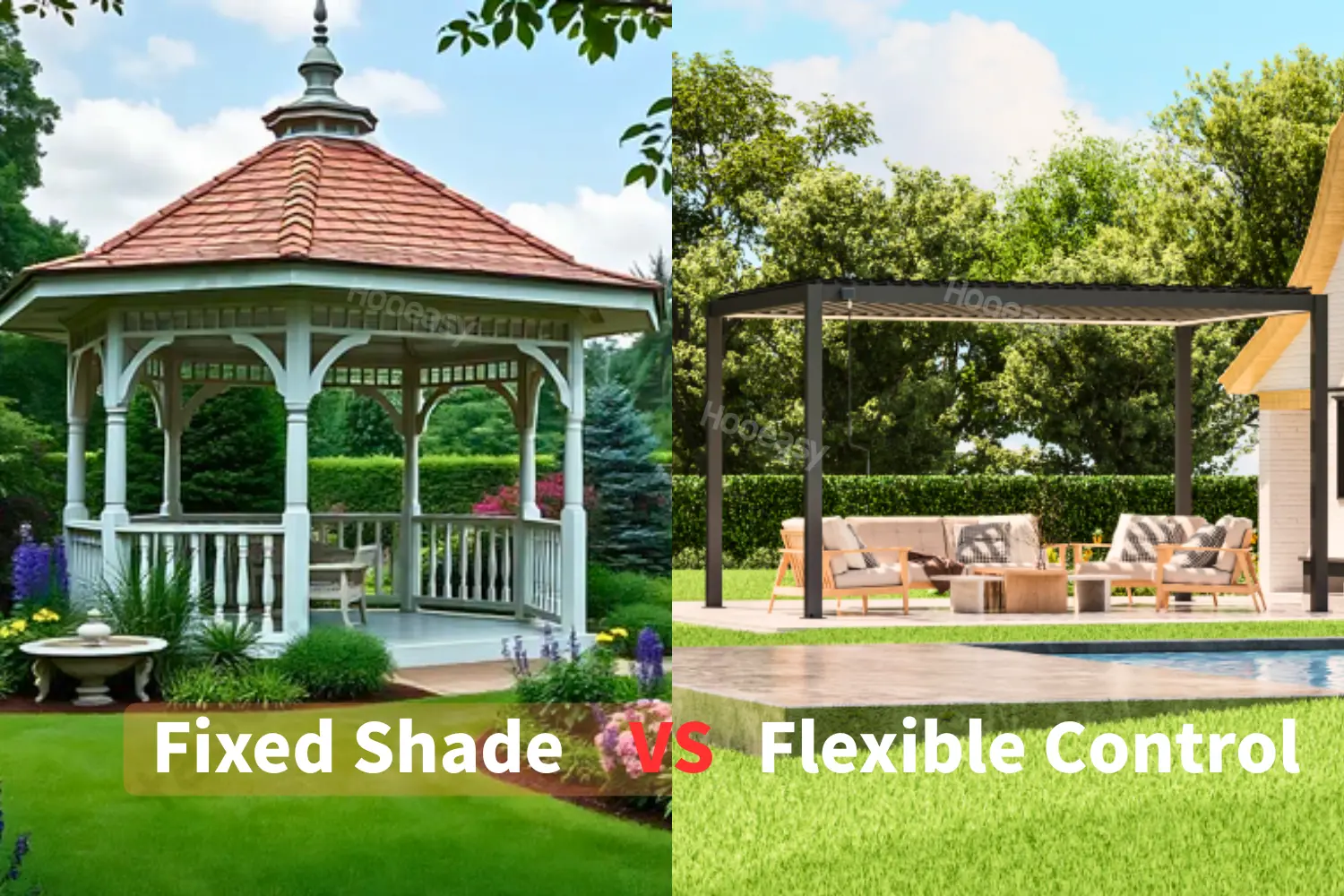 Hooeasy-Companys-Pergola-Products-vs.-Gazebos-Comparison-Images
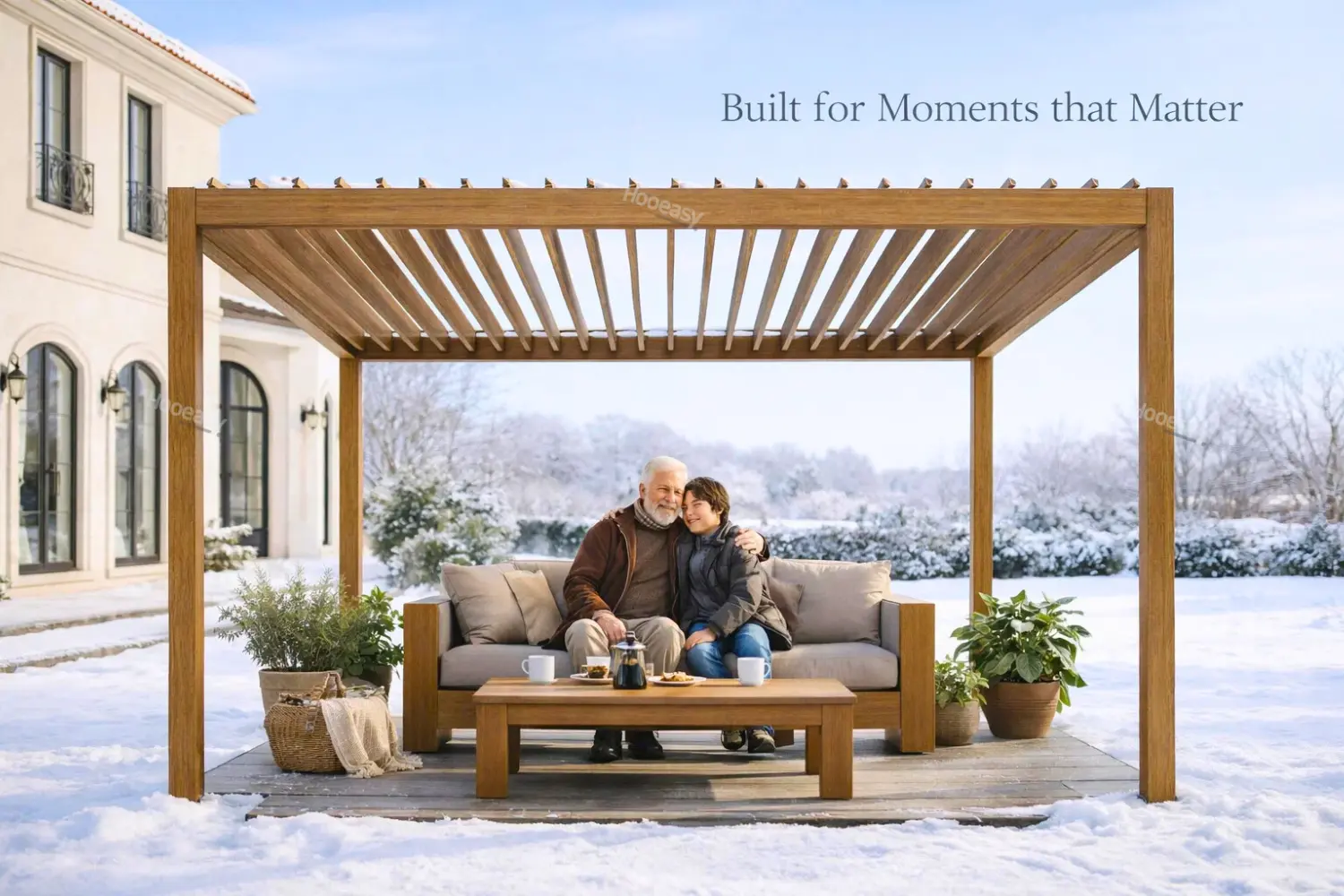 A-specific-usage-scenario-image-of-a-grandparent-and-grandchild-embracing-under-Hooeasys-pergola-product