Introduction: What’s the Point of Having a Pergola?
A beautiful backyard is one thing. A backyard you can actually enjoy throughout the day is another.
Imagine having breakfast on your patio without the morning sun shining directly into your eyes, enjoying an afternoon outdoors without constantly searching for shade, or hosting dinner with friends under a comfortable, well-designed outdoor structure.
These are just some of the key pergola benefits that can transform an ordinary backyard into a more functional, comfortable, and inviting outdoor living space.
This is where a pergola makes a difference.
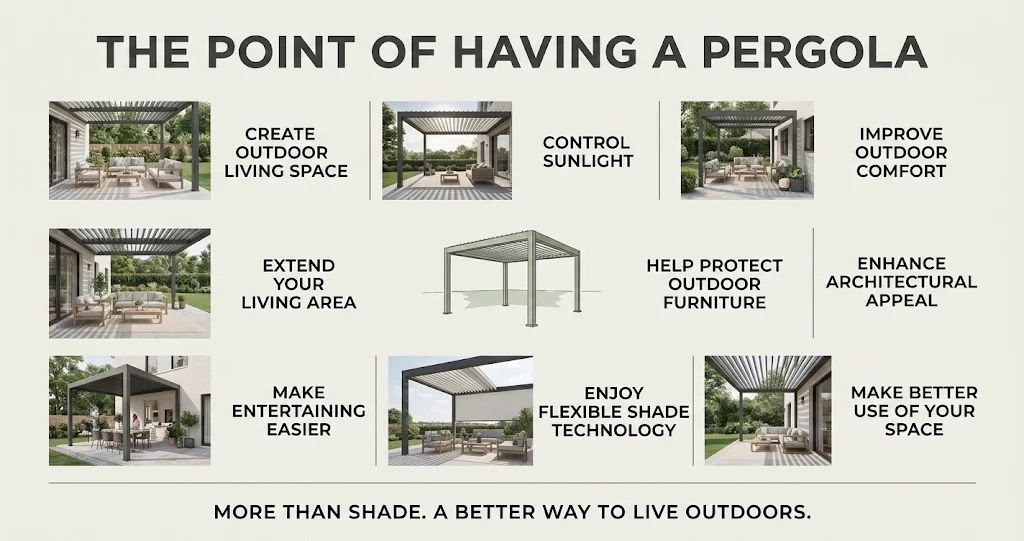
So, what’s the point of having a pergola? The main purpose of a pergola is to make outdoor spaces more functional, comfortable, and enjoyable. It provides shade, defines an outdoor living area, and can improve control over sunlight and ventilation. Depending on its design, a pergola can also offer rain protection, enhance architectural appeal, and extend the usability of patios, gardens, and terraces.
With outdoor living becoming an increasingly important part of residential design, pergolas are attracting attention from homeowners, architects, landscape designers, contractors, and commercial property developers alike.
In this guide, we’ll explore nine practical reasons to have a pergola, compare different pergola types, and answer the most common questions people ask before installing one.
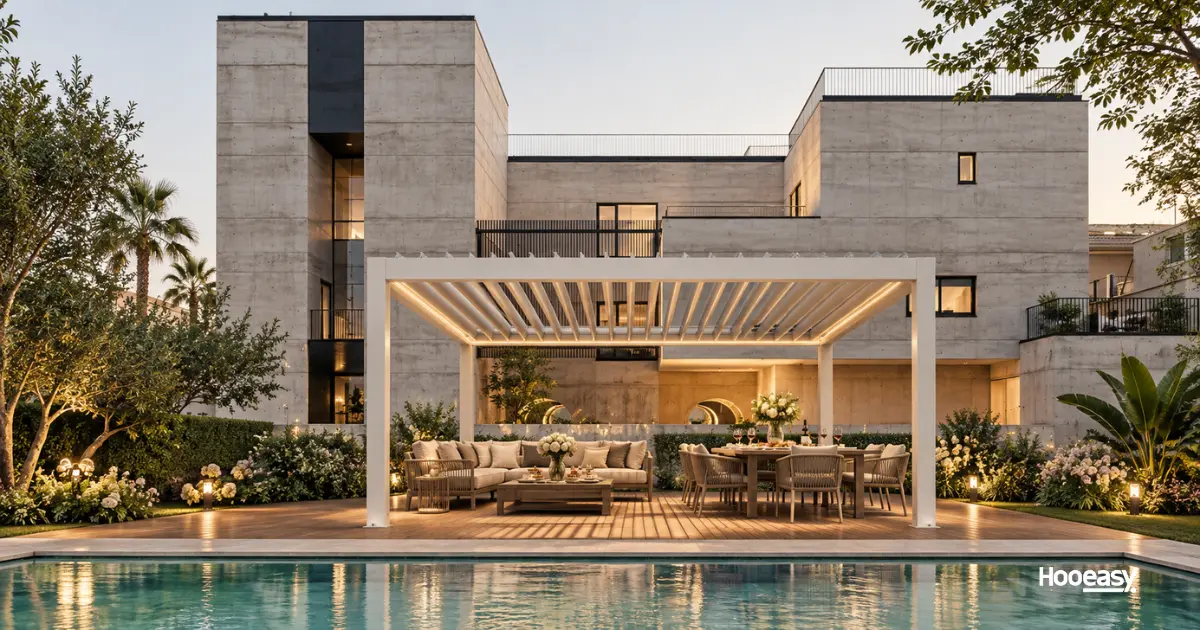
1. Create a Comfortable Outdoor Living Space
One of the biggest reasons to install a pergola is simple: it makes outdoor space more usable.
Many homes have patios, gardens, or terraces that look attractive but are not particularly comfortable to spend time in. Direct sunlight, unpredictable weather, and a lack of clearly defined spaces can limit how often these areas are used.
A pergola helps solve this problem by creating a dedicated outdoor living zone.
You can turn the space underneath into:
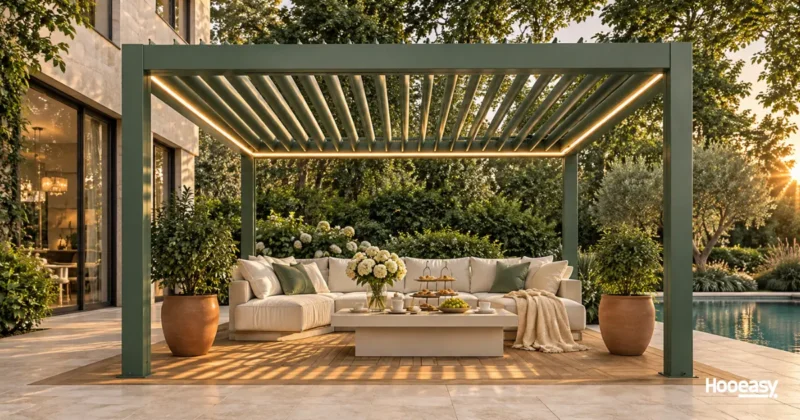
- An outdoor lounge with sofas and coffee tables.
- A dining area for family meals and entertaining.
- A quiet reading corner.
- An outdoor kitchen or barbecue area.
- A relaxing poolside retreat.
Instead of treating your patio as an empty extension of the garden, a pergola gives it a clear purpose.
This trend is also reflected in recent outdoor renovation research. According to the 2026 U.S. Houzz Outdoor Trends Study, 83% of surveyed homeowners undertaking outdoor renovations included a lounge or seating area in their projects.
The findings suggest that homeowners increasingly want outdoor spaces that support everyday activities rather than simply improve the appearance of their properties.
The takeaway: A pergola helps turn unused outdoor square footage into a space that encourages people to spend more time outside.
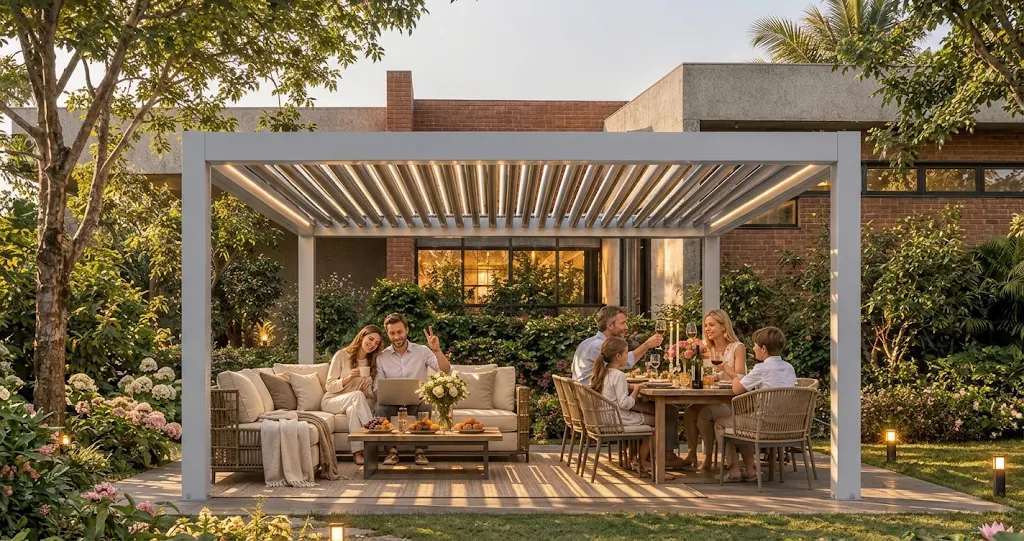
2. Enjoy Shade Without Completely Blocking Natural Light
Direct sunlight can make an outdoor area uncomfortable, particularly during the hottest hours of the day.
A pergola provides a practical way to introduce shade while maintaining an open-air atmosphere.
Unlike a fully enclosed outdoor room, many pergola designs allow natural light and airflow to pass through the structure.
However, the level of shade depends heavily on the roof design.
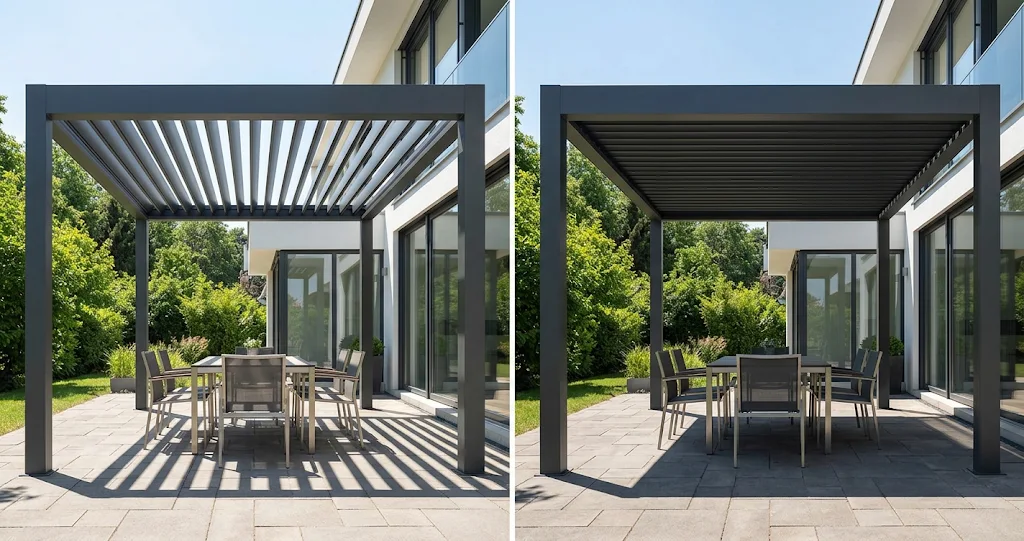
Traditional open-roof pergolas provide partial shade, while systems with retractable canopies or adjustable louvers offer greater control over sunlight.
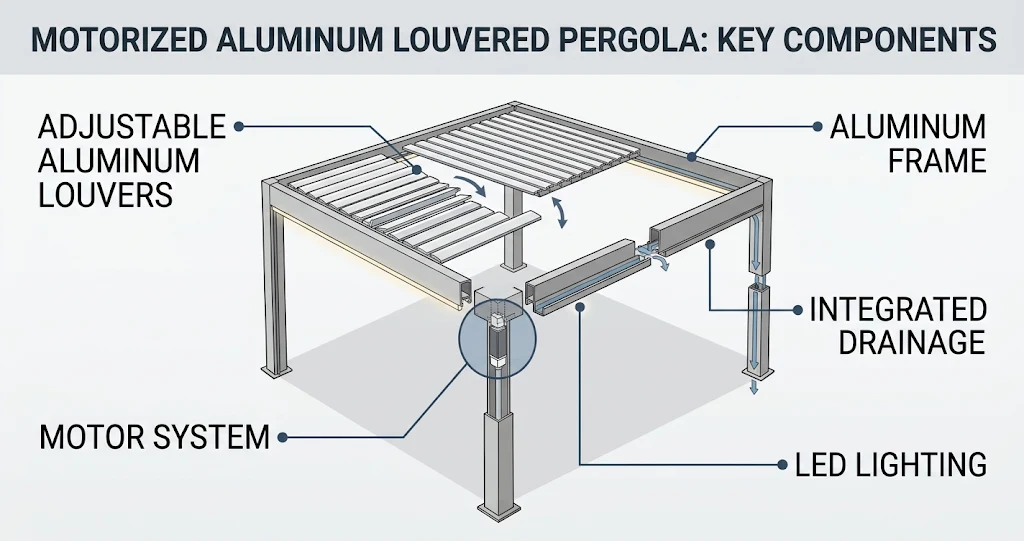
For homeowners who want more flexibility, a motorized louvered pergola is an especially practical option.
Its adjustable aluminum louvers can be tilted to different angles to:
- Reduce direct sunlight during hot afternoons.
- Allow more natural light when the weather is pleasant.
- Adjust the balance between shade and ventilation.
- Close the roof when rain protection is needed, provided the system is engineered for drainage and weather protection.
This flexibility makes a pergola useful across different times of the day and changing weather conditions.
The takeaway: A well-designed pergola does not simply block sunlight. It gives you more control over how sunlight enters your outdoor space.
3. Improve Outdoor Comfort During Hot Weather
Extreme heat is changing the way people think about outdoor spaces.
In October 2026, reporting on Los Angeles’ approach to urban shade highlighted how canopies and other shade structures are being considered as practical tools for improving outdoor comfort.
Meanwhile, research on European cities has drawn attention to the shortage of nearby tree canopy around many buildings.
These developments highlight an important design consideration: shade is becoming an increasingly valuable feature in both public and private outdoor environments.
A residential pergola cannot replace trees or eliminate heat exposure. However, it can create a shaded area that is more comfortable than a fully exposed patio.
Its performance depends on several factors:
- Roof coverage and louver positioning.
- Pergola orientation and sun exposure.
- Local climate and prevailing wind conditions.
- Ventilation and surrounding landscape.
- Optional accessories such as side screens or outdoor blinds.
An adjustable louvered pergola offers an additional advantage: users can modify the roof position as sunlight changes throughout the day.
For properties in sunny climates, this can make outdoor dining, relaxing, and entertaining more enjoyable.
For further context, explore this research on urban shade infrastructure and heat adaptation.
The takeaway: Shade is not just a decorative feature. It is an important part of designing an outdoor space around real environmental conditions.
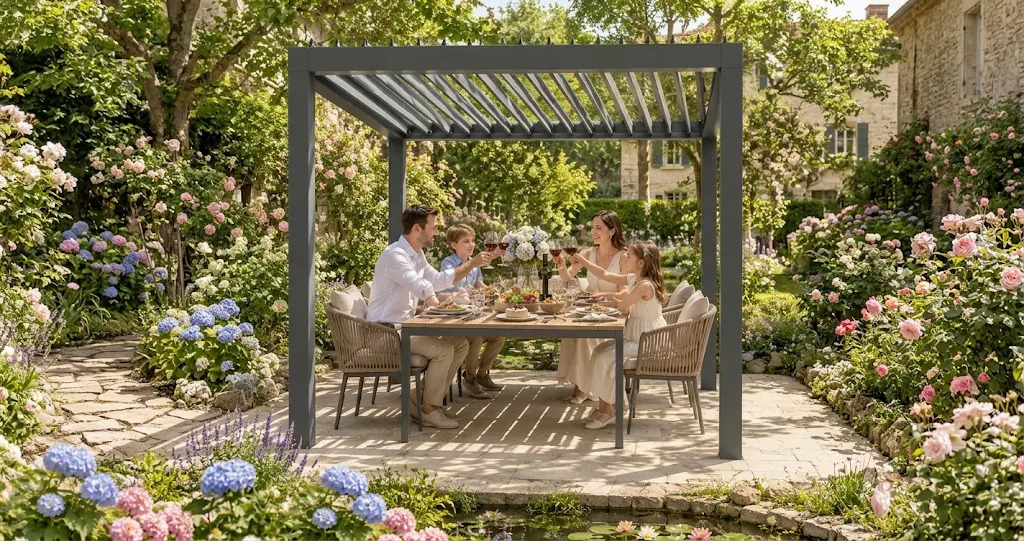
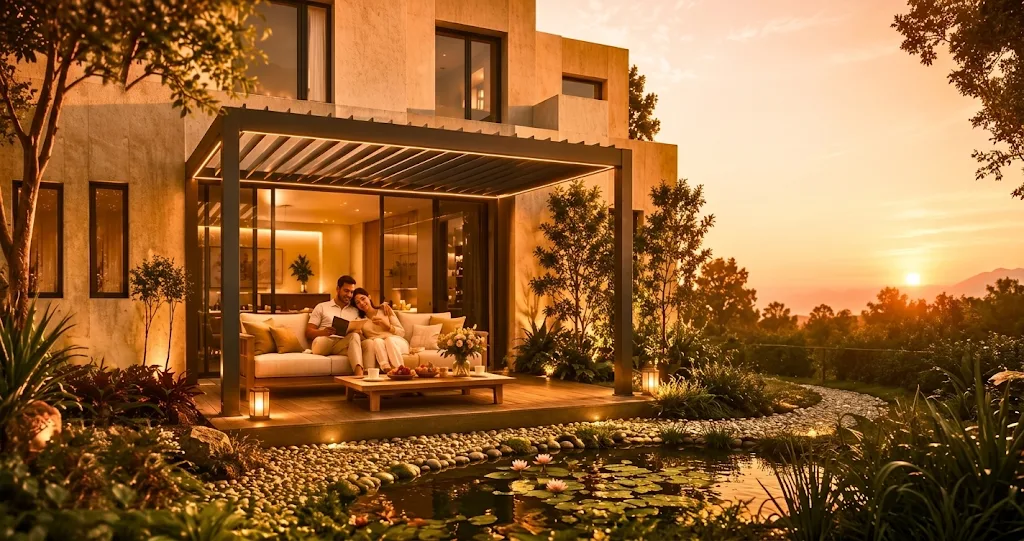
4. Extend Your Living Space Without Building a Traditional Room
A pergola creates a natural transition between indoor and outdoor living.
It can be installed against an exterior wall or positioned independently in the garden, allowing homeowners to create an additional functional zone without constructing a conventional enclosed room.
For example:
- A pergola beside the living room can create an outdoor lounge.
- A pergola connected to the kitchen can extend the dining area.
- A garden pergola can provide a separate relaxation space.
- A poolside pergola can create a shaded place to rest.
This indoor-outdoor connection is particularly valuable for modern homes where patios, gardens, and terraces are designed as part of the overall living environment.
With the addition of outdoor lighting, comfortable furniture, heating solutions where appropriate, and optional side screens, the area can become useful beyond daylight hours and across more seasons.
It is important to remember that a pergola is not automatically equivalent to an enclosed extension. Its actual usability depends on its roof, accessories, climate, and installation.
Homeowners exploring additional exterior shading options can also discover different outdoor awning solutions.
The takeaway: A pergola expands the way you use your existing property without necessarily requiring a traditional home extension.
5. Protect Outdoor Furniture and Create a More Organized Space
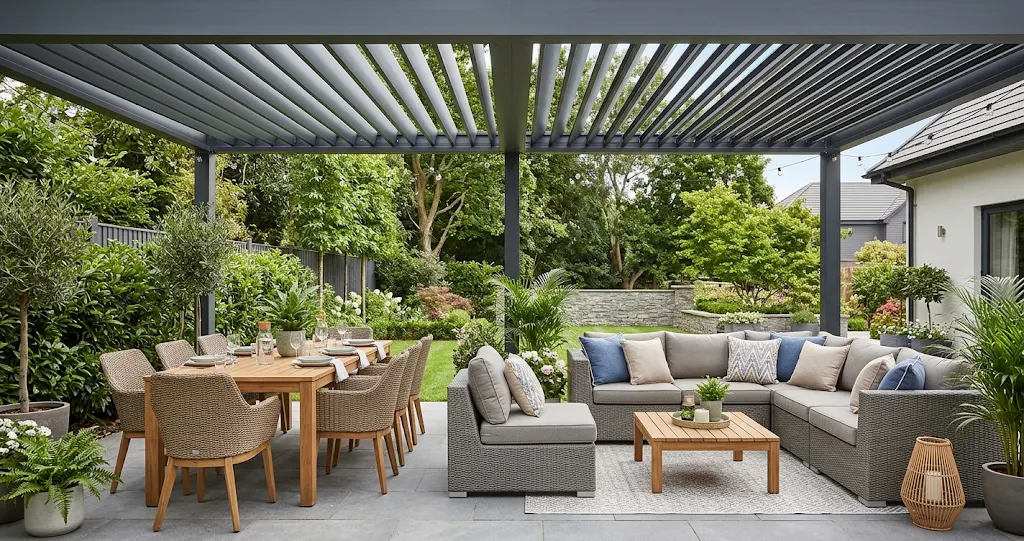
Outdoor furniture is constantly exposed to sunlight, rain, dust, and changing temperatures.
Prolonged UV exposure can contribute to fading and material deterioration, while repeated moisture exposure may affect furniture, cushions, and decorative items.
A suitable pergola roof can help reduce direct exposure to these conditions.
For example, a louvered roof can be closed during rain when the product is designed with appropriate drainage and weather-resistant components. It can also be adjusted to provide shade over furniture during sunny periods.
Depending on the design, a pergola can help protect:
- Outdoor sofas and cushions.
- Dining tables and chairs.
- Outdoor kitchen work areas.
- Decorative accessories.
- Selected electronic equipment designed for outdoor use.
However, a pergola should not be assumed to provide complete waterproof or storm protection. Furniture should still be selected for outdoor conditions, and removable cushions or sensitive equipment may require additional protection.
Beyond practical protection, a pergola also makes it easier to organize an outdoor area.
Lighting, furniture arrangements, planters, privacy screens, and decorative elements can all be coordinated around one central structure.
The takeaway: A pergola helps create a more organized outdoor environment while reducing some direct exposure to weather.
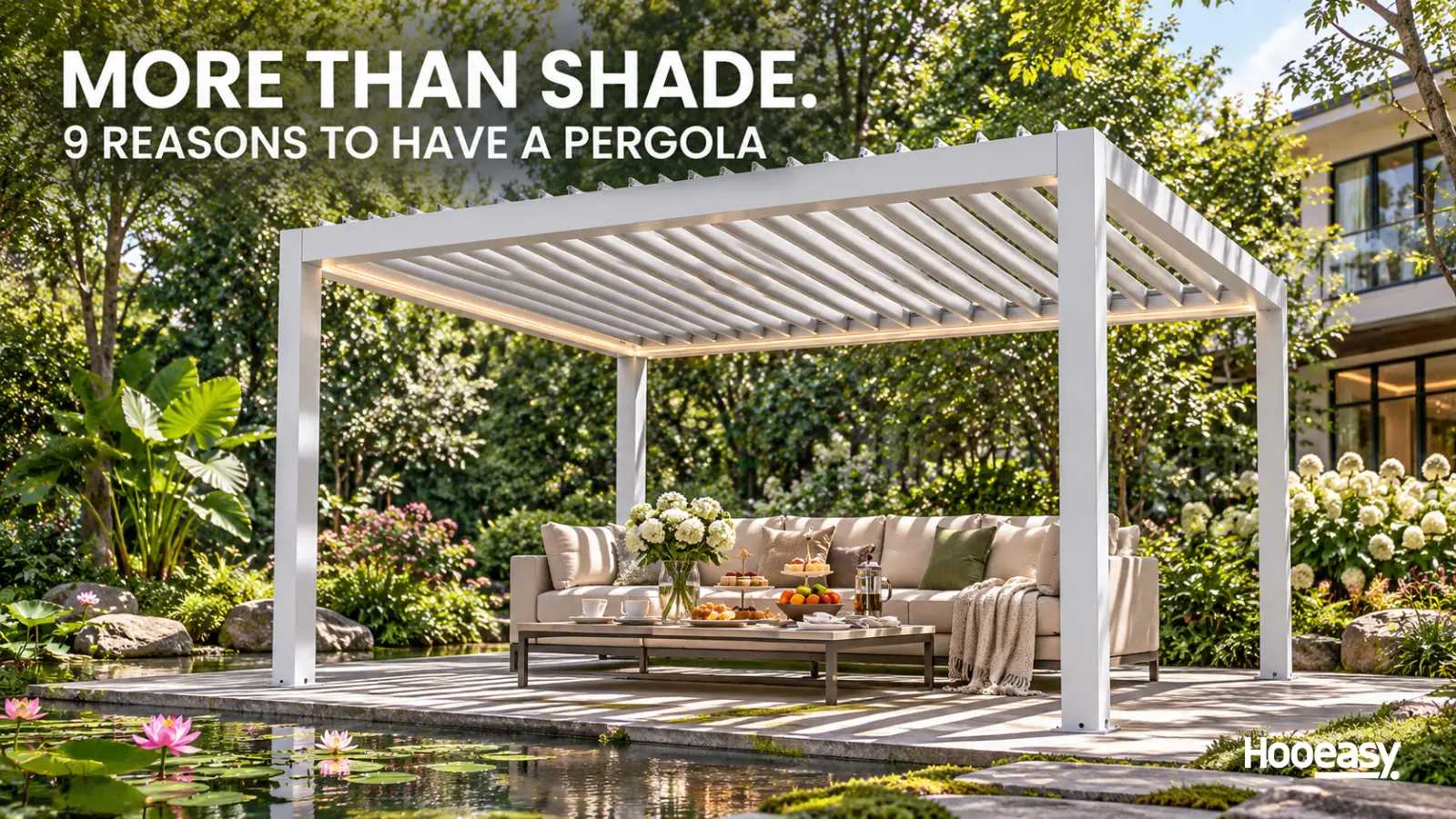
6. Increase the Visual Appeal of Your Property
A pergola can become a defining architectural feature of a home.
The right design adds structure, depth, and visual interest to an otherwise open outdoor area.
Depending on the architectural style, a pergola can create very different atmospheres:
- Modern minimalist: Clean aluminum lines, neutral colors, and integrated lighting.
- Contemporary luxury: Large-span structures, sophisticated finishes, and coordinated outdoor furniture.
- Natural-inspired: Warm wood tones, greenery, and organic landscaping.
- Mediterranean: Light-colored materials, textured surfaces, and relaxed outdoor dining areas.
A well-integrated pergola can also help visually connect the home’s exterior architecture with its garden and landscaping.
For architects and landscape designers, it offers another way to create distinct outdoor zones without relying entirely on walls or fences.
However, it is worth distinguishing between aesthetic appeal and measurable property value. A pergola may improve the presentation and functionality of a property, but its impact on resale value depends on local market conditions, construction quality, design consistency, and buyer preferences.
The takeaway: A pergola is both a functional structure and an architectural design element.
7. Make Outdoor Entertaining More Enjoyable
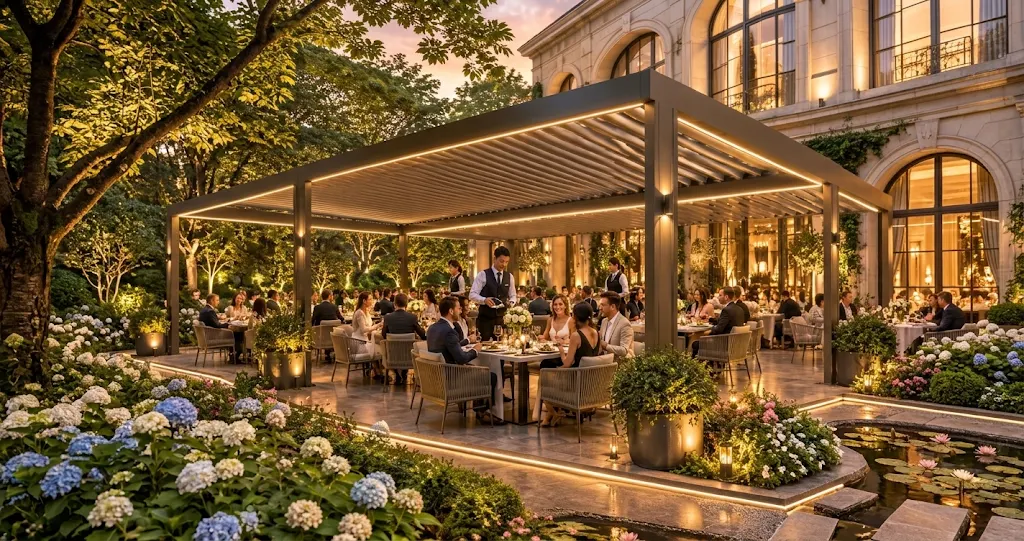
A pergola can turn an ordinary patio into a natural gathering place.
Whether you are hosting a weekend barbecue, enjoying a family dinner, or inviting friends over for an evening outdoors, a covered or partially shaded area makes the experience more comfortable.
It also provides a natural framework for arranging different entertainment features.
Consider combining a pergola with:
- An outdoor dining table.
- A built-in barbecue or kitchen.
- Integrated LED lighting.
- Weather-resistant lounge furniture.
- Outdoor speakers.
- Optional privacy screens.
For commercial properties, pergolas can also help create more inviting outdoor customer areas.
Restaurants, hotels, resorts, cafés, and hospitality venues can use pergolas to define outdoor seating zones and improve the usability of terraces and courtyards.
For these businesses, the value is not simply visual. A thoughtfully planned outdoor area can support a more attractive customer experience.
The takeaway: A pergola gives outdoor gatherings a more comfortable and organized setting.
8. Enjoy Greater Flexibility with Modern Pergola Technology
Not all pergolas offer the same level of functionality.
Traditional pergolas provide a relatively simple overhead structure, but modern designs introduce adjustable roofs, motorization, integrated lighting, and optional enclosure systems.
Among these options, the bioclimatic or motorized louvered pergola stands out for its ability to adapt to changing conditions.
Its roof consists of adjustable aluminum louvers that can be tilted to regulate sunlight and airflow.
Depending on the product design, users can operate the louvers manually or through a motorized control system.
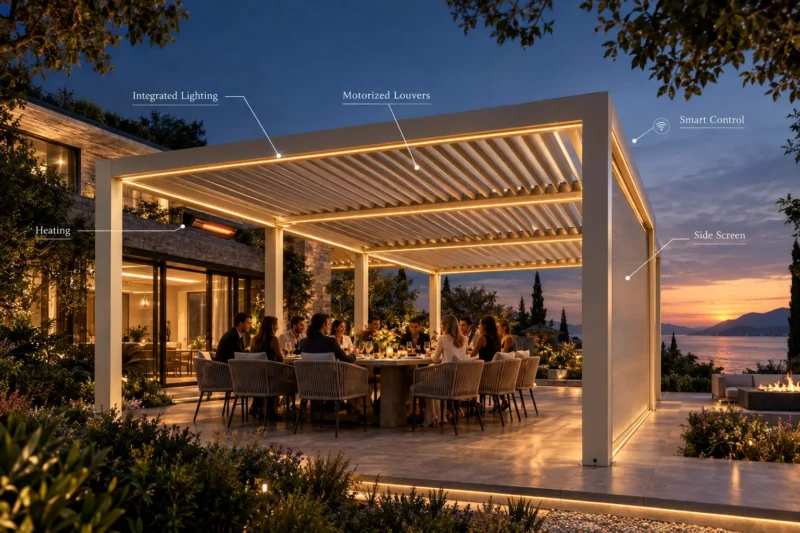
Some advanced configurations may also include:
- Remote control or smart-home integration.
- Integrated LED lighting.
- Side screens or retractable blinds.
- Rain sensors.
- Drainage systems.
- Custom dimensions and finishes.
The key advantage is adaptability.
On a sunny afternoon, the louvers can be adjusted to provide shade. When more daylight is preferred, they can be opened. During suitable rainfall conditions, the roof can be closed to provide overhead protection.
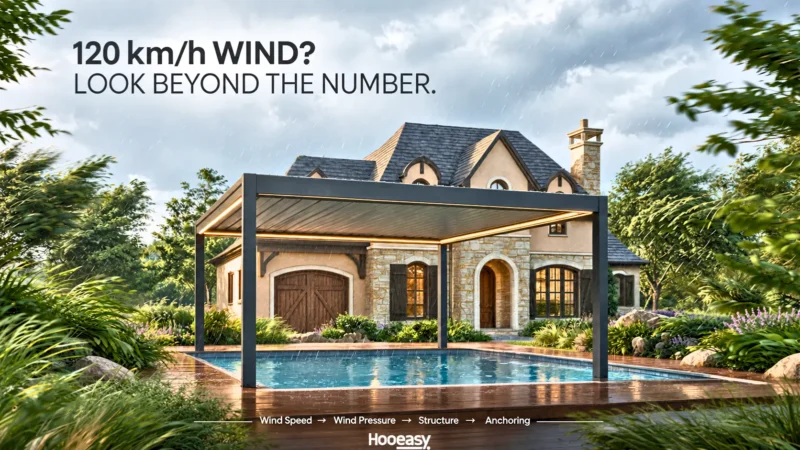
Of course, actual wind resistance, rain performance, and operating limits depend on the engineering specifications and installation requirements of each model.
For homeowners who want an outdoor structure with greater control over light and ventilation, a motorized louvered pergola is worth considering.
Explore Hooeasy’s motorized aluminum pergola solutions to understand how adjustable roof systems can support different outdoor living requirements.
The takeaway: Modern pergolas are evolving from simple shade structures into adaptable outdoor systems.
9. Make Better Use of Your Existing Outdoor Space
Perhaps the most overlooked benefit of a pergola is that it helps you get more value from space you already have.
A large garden is not necessarily a functional garden. A spacious patio does not automatically become a place where people want to spend time.
The difference often comes down to planning and usability.
A pergola can help define an area, provide shade, support furniture arrangements, and create a more intentional relationship between the house and landscape.
It can be especially useful for:
- Small urban terraces.
- Narrow side yards.
- Rooftop gardens.
- Poolside spaces.
- Large residential gardens.
- Commercial outdoor seating areas.
The important thing is to choose a structure that matches the available space, intended use, and local environmental conditions.
A carefully planned pergola can make even a relatively modest outdoor area feel more purposeful.
The takeaway: You do not necessarily need a larger garden. You may simply need to make better use of the space you already have.
What Type of Pergola Should You Choose?
Understanding the benefits is only the first step. The right pergola depends on how you plan to use it.
Here is a simple comparison of common pergola types.
| Pergola Type | Main Features | Best For |
|---|---|---|
| Traditional open-roof pergola | Fixed open-beam roof | Decorative garden areas and climbing plants |
| Retractable canopy pergola | Fabric roof that can be extended or retracted | Flexible shade and light control |
| Fixed-roof pergola | Permanent solid or translucent covering | Consistent overhead coverage |
| Motorized louvered pergola | Adjustable aluminum roof louvers | Flexible shade, ventilation, and rain management |
| Manual louvered pergola | Manually adjustable louvers | Users seeking adjustable shade without motorization |
Why Are Motorized Louvered Pergolas Becoming Popular?
For homeowners who want more control over their outdoor environment, a motorized louvered pergola offers several advantages.
Unlike an open-beam structure, its adjustable roof allows users to change the amount of sunlight and airflow entering the space.
Unlike a fixed roof, it provides greater flexibility as weather conditions change.
For B2B buyers, it also offers opportunities to develop differentiated outdoor living product ranges through different sizes, finishes, configurations, and optional accessories.
Explore our motorized pergola solutions to learn more about adjustable outdoor shade systems.
Is a Pergola Worth It?
For many homeowners, a pergola can be a worthwhile investment if it solves a real outdoor living problem.
However, the answer depends on how frequently you will use the space, what level of weather protection you need, and how much you are prepared to invest.
Before making a decision, consider these five questions:
- How often will you use the space? A pergola is more valuable when it supports regular activities such as dining, relaxing, and entertaining.
- What weather conditions do you experience? Sun exposure, rainfall, wind, and snow loads should influence your design choice.
- How much shade do you need? An open-beam pergola, retractable canopy, and adjustable louvered roof provide different levels of control.
- Do you need additional accessories? Lighting, side screens, heating, and automation may improve functionality but add to the overall budget.
- Does the structure fit your property? Dimensions, architectural style, drainage, foundations, and local building regulations all matter.
A pergola is not automatically the best solution for every property. But when the design matches the intended use and local conditions, it can make outdoor space considerably more functional.
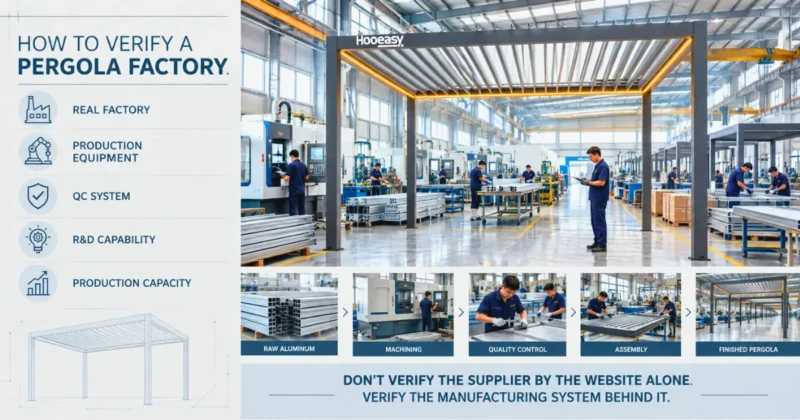
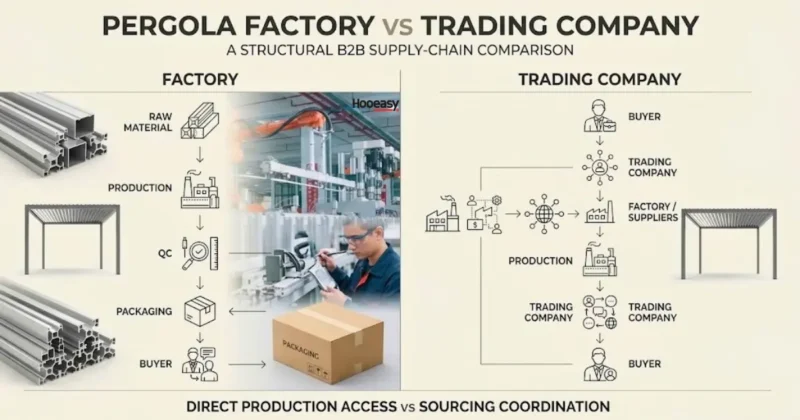
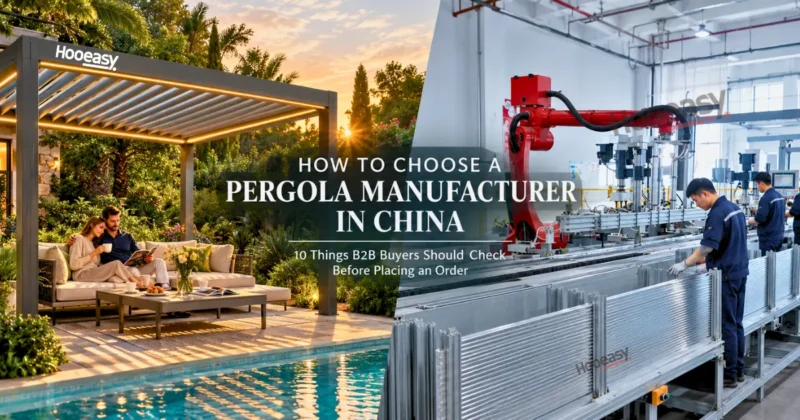
For B2B buyers evaluating suppliers, our guide on how to choose a pergola manufacturer in China provides a useful starting point for assessing manufacturing capabilities, product quality, and customization options.
Frequently Asked Questions About Pergolas
1. What is the main purpose of a pergola?
The main purpose of a pergola is to create a defined outdoor living area while providing varying levels of shade and architectural structure. Depending on its roof design, it can also offer ventilation control, rain protection, and a more comfortable setting for outdoor activities.
2. Does a pergola actually keep you cool?
A pergola can make an outdoor area feel more comfortable by reducing direct solar exposure. Adjustable louvers can help regulate sunlight and ventilation. However, a pergola does not actively cool the air like an air conditioner, and its effectiveness depends on roof coverage, orientation, airflow, and local climate.
3. Does a pergola protect you from rain?
It depends on the roof system. An open-roof pergola provides little rain protection, while a suitably engineered louvered pergola can close its roof and direct water through an integrated drainage system. Performance depends on the product’s design, installation, and specified weather limits.
4. Can you use a pergola all year round?
Potentially, yes. A pergola with adjustable louvers, side screens, suitable lighting, and optional heating can extend the usability of an outdoor area across more seasons. However, winter use depends on local temperatures, snow and wind loads, and the structure’s specifications.
5. Does a pergola add value to a house?
A well-designed pergola may improve a property’s outdoor appeal and functionality. However, there is no universal guarantee of a higher resale price. The result depends on local buyer preferences, installation quality, design compatibility, and market conditions.
6. What is the difference between a pergola and a gazebo?
A pergola typically features an open or adjustable roof supported by posts, creating a semi-open outdoor space. A gazebo generally has a more enclosed or continuously covered roof structure. Pergolas are often chosen for flexible shade and indoor-outdoor integration, while gazebos usually provide more consistent overhead shelter.
7. Are aluminum pergolas better than wooden pergolas?
Neither material is universally better. Aluminum pergolas are often selected for their modern appearance, structural design options, and relatively low routine maintenance. Wooden pergolas offer a natural aesthetic but may require more frequent maintenance depending on the timber and climate.
8. Is a motorized louvered pergola worth the extra cost?
It can be worthwhile if you frequently use the outdoor area and want convenient control over sunlight and ventilation. Motorization also makes larger or frequently adjusted systems easier to operate. The additional cost should be evaluated against the desired features, engineering, installation, and expected usage.
9. How much does a pergola cost?
Pergola prices vary considerably depending on dimensions, materials, roof systems, motorization, accessories, engineering requirements, and installation. A basic open-beam structure will generally have a different cost profile from a customized motorized aluminum louvered pergola. Request a quotation based on your actual project specifications rather than relying on a generic price estimate.
10. What should you look for when buying a pergola?
Consider the manufacturer’s production capabilities, material quality, structural design, drainage system, weather-performance documentation, quality control, customization options, warranty terms, and after-sales support.
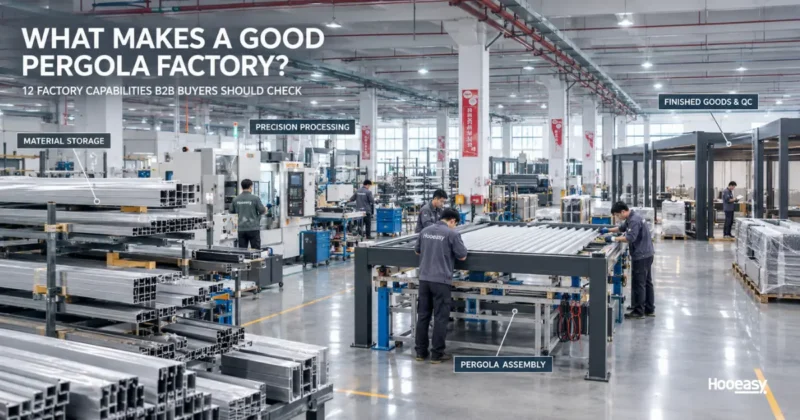
For a more detailed evaluation, read our guide on what makes a good pergola factory: 12 factory capabilities B2B buyers should check.
Final Thoughts: A Pergola Is More Than a Garden Feature
So, what’s the point of having a pergola?
It is about making outdoor space more useful, comfortable, and enjoyable.
From creating a shaded dining area to supporting modern outdoor entertaining, a pergola can transform the way people interact with their homes and surroundings.
As outdoor living continues to evolve, the value of a pergola increasingly lies in its combination of architectural design, environmental adaptability, and everyday functionality.
For homeowners, choosing the right structure starts with understanding how they want to use their outdoor space.
For architects, contractors, distributors, and outdoor living brands, it starts with finding a manufacturing partner that can deliver consistent quality, flexible configurations, and reliable product support.
At Hooeasy, we specialize in the development and manufacturing of aluminum pergola and outdoor shading solutions. With a 152,000 m² manufacturing facility, OEM/ODM capabilities, and a focus on product development and quality management, we work with B2B partners to develop outdoor living products for different markets and project requirements.
Whether you are developing a new pergola product range or sourcing a reliable manufacturing partner, the right solution begins with understanding your market.
Looking for a pergola manufacturing partner?
Explore Hooeasy’s pergola solutions or contact our team to discuss your OEM/ODM requirements.
Hooeasy — Creating Better Outdoor Living Experiences.
Sources & Further Reading
- 2026 U.S. Houzz Outdoor Trends Study
- Los Angeles Shade Infrastructure and Extreme Heat
- World Health Organization – Heat and Health
About Hooeasy
Hooeasy is an aluminum pergola and outdoor shading solutions manufacturer offering OEM/ODM development and manufacturing support for B2B partners worldwide.
Website: https://www.hooeasy.com/
Contact: https://www.hooeasy.com/contact/