Introduction: Is Outdoor Living Moving Beyond Safe Neutrals in 2027?
For years, white, black, gray, and understated beige have dominated contemporary outdoor living design. However, Pergola Color Trends 2027 are moving beyond traditional neutrals, as homeowners, architects, and outdoor living brands increasingly explore richer colors, warmer materials, and more distinctive combinations to create sophisticated, nature-inspired outdoor spaces.
One recent signal comes from Benjamin Moore’s announcement of Webster Green HC-130 as its 2027 Color of the Year on October 14, 2026. The classic green anchors a palette of eight colors, including creamy white, pale blue, soft pink, golden tan, copper-inspired brown, olive-toned neutrals, and burgundy brown.
The announcement does not establish a universal color standard for outdoor products. However, it offers a useful source of inspiration for a broader design question: how can outdoor spaces feel more personal, sophisticated, and connected to nature without sacrificing architectural coherence?
For pergola manufacturers, outdoor furniture brands, distributors, and project developers, the opportunity extends beyond choosing a fashionable color. It involves coordinating the pergola frame, decking, furniture, planting, lighting, and surrounding architecture into a consistent outdoor living system.
In this guide, we explore the 2027 color direction, practical pergola color combinations, material pairings, and considerations for B2B buyers sourcing aluminum pergolas for different markets.
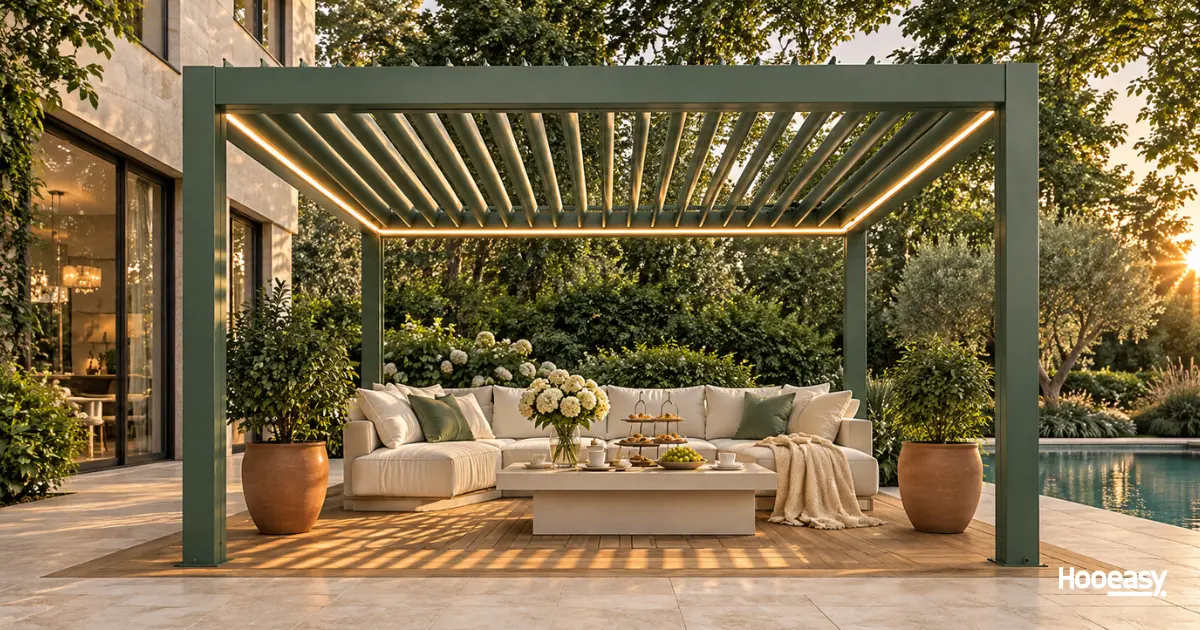
1. What Is Webster Green HC-130, and Why Does It Matter for 2027 Design?
Webster Green HC-130 is Benjamin Moore’s 2027 Color of the Year. It is a classic, confident green selected to bridge traditional color references and contemporary interiors.
Rather than relying on a pale, barely noticeable green, Webster Green introduces more visual depth and personality. Its character makes it a useful starting point for thinking about architectural contrast, natural materials, and statement-making details.
Benjamin Moore’s Color Trends 2027 palette includes eight colors:
- Webster Green HC-130: A distinctive, classic green.
- White Down OC-131: A soft, warm off-white.
- Nelson Blue CW-635: A gentle, watery blue.
- Shakespeare Tan 228: A golden neutral.
- Antique Copper 1169: A warm, copper-influenced brown.
- Wild Aster 1240: A muted pink with gray undertones.
- Durango 2137-30: A deep neutral with olive undertones.
- Townsend Harbor Brown HC-64: A grounded burgundy-brown.
Together, these colors point toward a design language that balances expressive color with timeless materials and warm neutrals.
For outdoor living, the most useful takeaway is not that every pergola should be green. It is that color can become a deliberate architectural decision rather than an afterthought.
A pergola’s finish can visually connect a building to its garden, define an outdoor dining area, or create contrast against a pale facade. Even when a project retains a neutral frame, the surrounding palette can introduce richer colors through furniture, cushions, planters, decking, and lighting.
For the official announcement and complete palette, visit Benjamin Moore’s Color of the Year 2027.
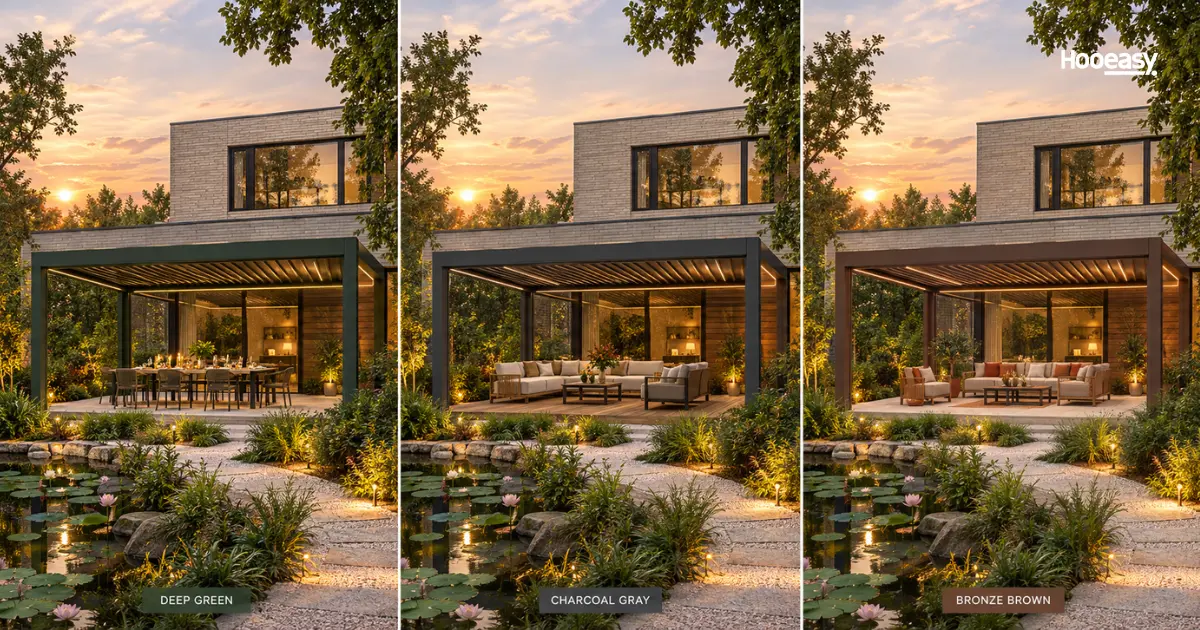
2. How Will the 2027 Color Trend Influence Pergola Design?
Interior color forecasts do not automatically translate into outdoor product specifications. Outdoor structures must also respond to sunlight, weather exposure, building materials, landscape conditions, and local customer preferences.
Nevertheless, three design directions inspired by the 2027 palette offer useful opportunities for pergola brands.
2.1 Deep Green as an Architectural Accent
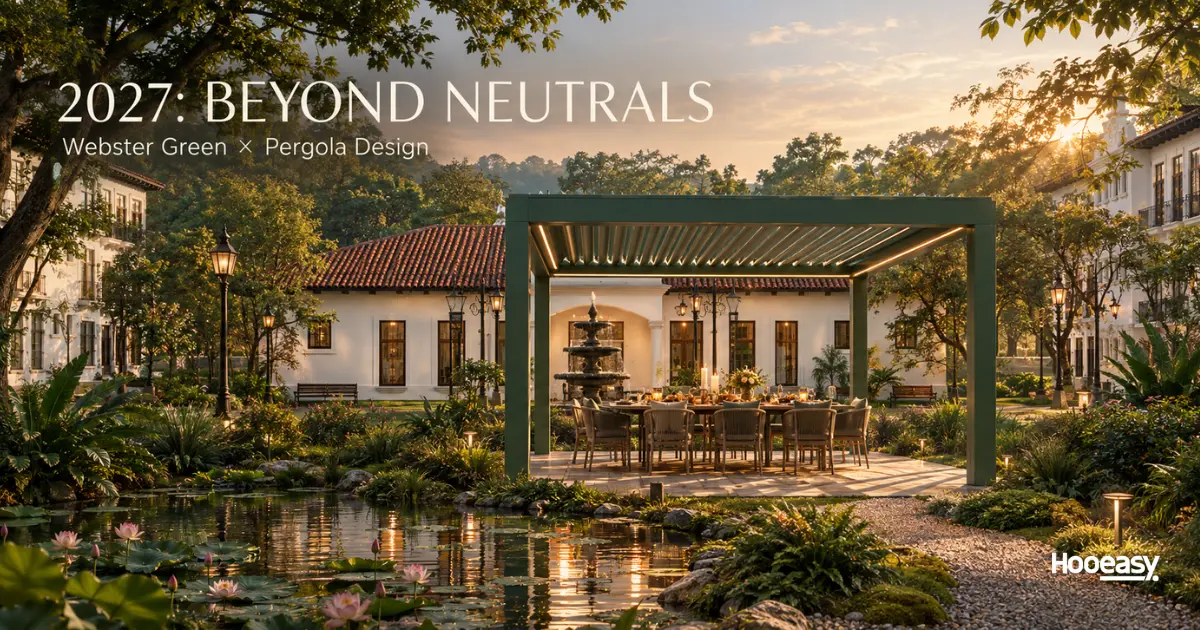
Deep green can create a strong visual connection between a pergola and its surrounding landscape. Against light stone, warm timber, or a pale facade, it can make the structure feel intentional rather than visually detached from the garden.
For a residential project, a green-inspired scheme may suit:
- Contemporary garden rooms surrounded by mature planting.
- Outdoor dining areas with natural timber furniture.
- Boutique hospitality terraces with a garden-led identity.
- Courtyards that combine mineral finishes and structured greenery.
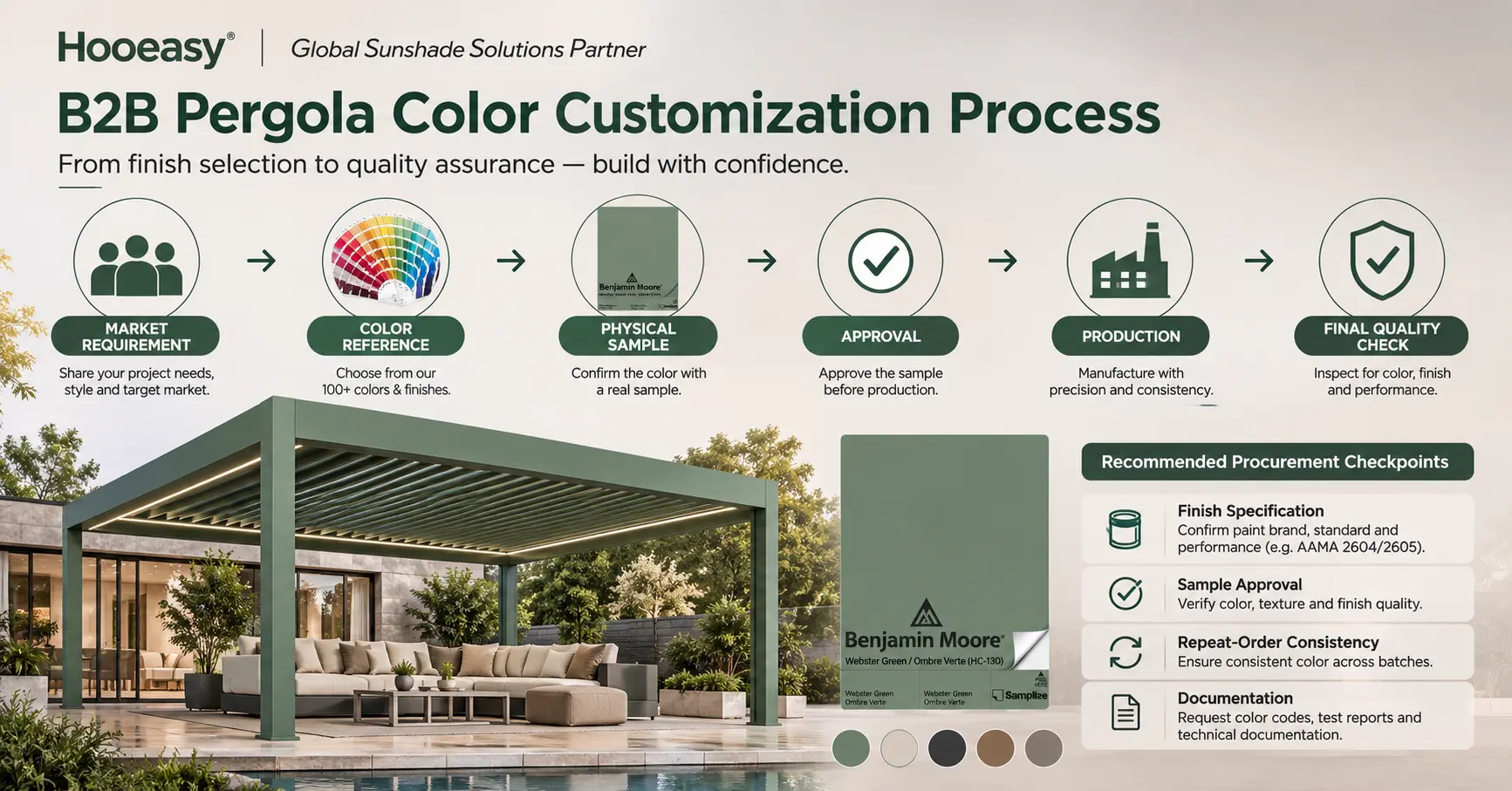
For B2B buyers, the key consideration is finish availability. A specific architectural green may require a custom powder-coated finish rather than a standard stock color.
Before specifying a color, confirm the available finish options, sample approval process, minimum order quantity, lead time, and color consistency requirements.
2.2 Warm Neutrals Create a More Inviting Foundation
Cream, sand, warm beige, and golden brown can soften the visual impact of aluminum structures.
Consider pairing a dark pergola frame with limestone-look paving, warm wood-look decking, or neutral outdoor upholstery. The contrast allows the pergola to define the space without making the entire setting feel dark.
This approach is particularly useful for projects where the building facade, flooring, or furniture already contains warm materials.
2.3 Expressive Colors Work Best When Balanced by Material
Pale blue, muted pink, copper-inspired brown, and burgundy brown can add personality to an outdoor scheme. However, using too many competing colors can make a space feel fragmented.
A more practical design method is to establish one dominant structural color, one supporting material tone, and one or two accent colors.
For example, a charcoal aluminum frame, warm oak-look decking, and muted terracotta accessories can create a layered composition without requiring a highly customized pergola finish.
The broader lesson for 2027 is simple: a memorable outdoor space depends on the relationship between color, material, light, and architecture—not on a single trending shade.
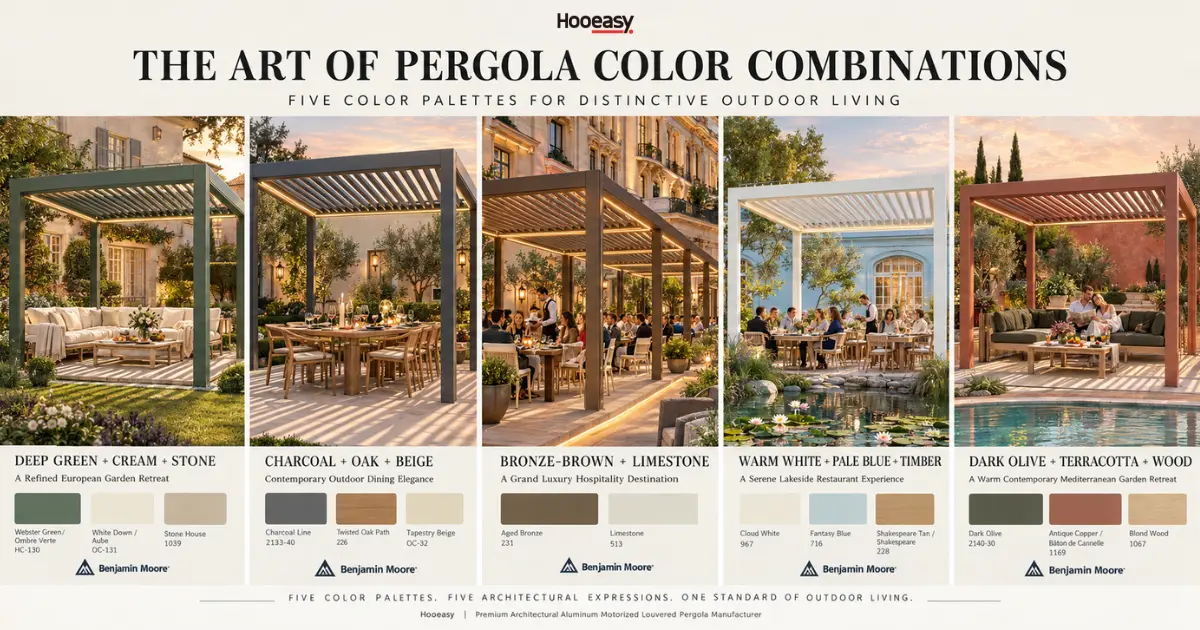
3. Five Pergola Color Combinations Inspired by the 2027 Palette
Choosing a pergola color becomes easier when the frame is considered alongside the surrounding architecture and materials.
The following combinations are design suggestions inspired by the broader 2027 color direction, not official Benjamin Moore exterior specifications.
Combination 1: Deep Green + Cream + Natural Stone
Design character: Garden-inspired, composed, and architectural.
A deep green-inspired frame creates contrast against cream walls and pale stone. Planting reinforces the connection with the landscape, while neutral furniture keeps the composition balanced.
Best suited for: Garden pergolas, landscaped patios, boutique hospitality settings, and premium residential projects.
B2B consideration: Ask suppliers whether a comparable green powder-coated finish can be produced, and request a physical sample before approving production.
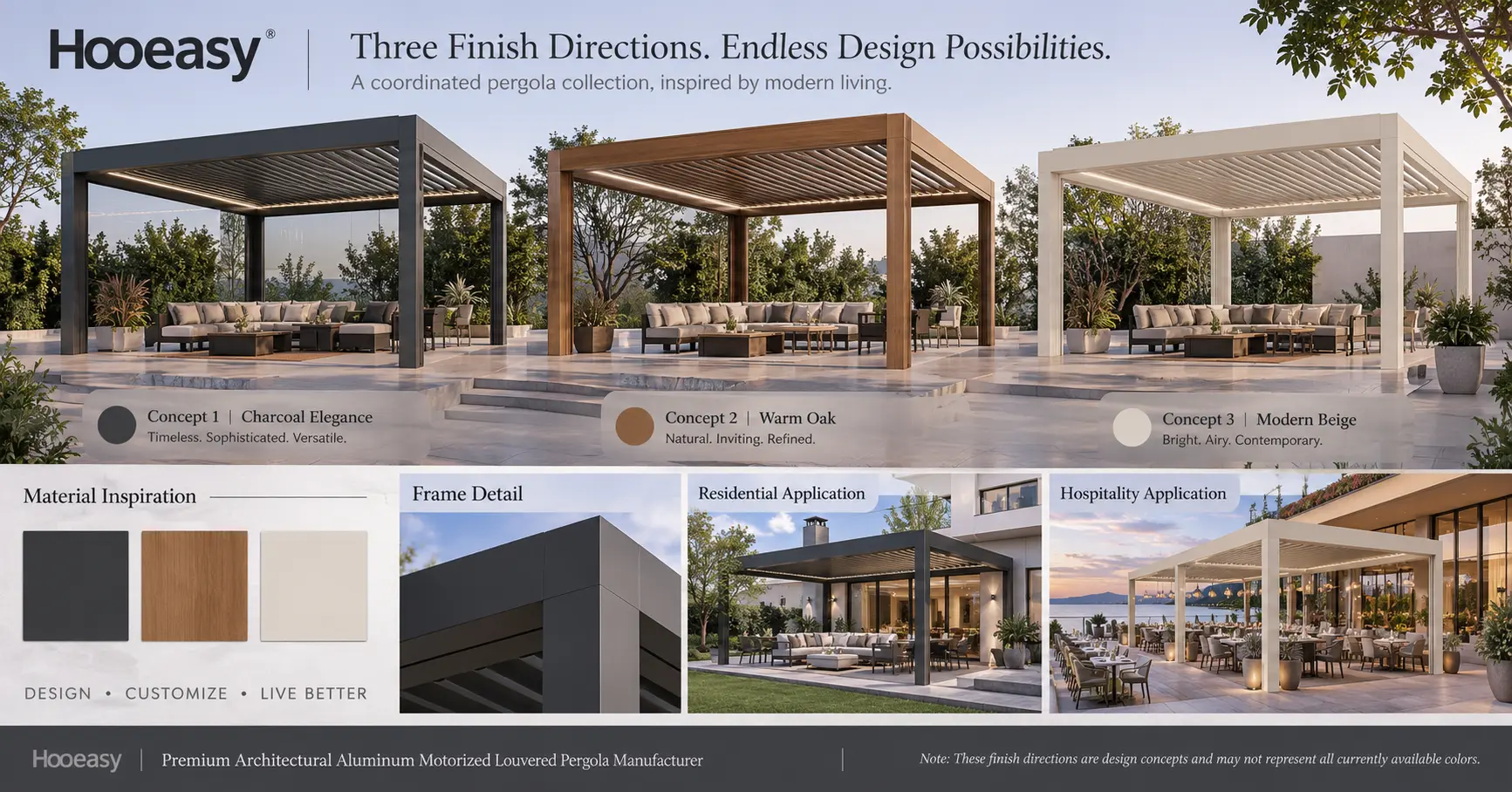
Combination 2: Charcoal + Warm Oak + Soft Beige
Design character: Modern, understated, and commercially versatile.
Charcoal provides a defined architectural outline, while warm timber tones and beige furnishings reduce the visual severity of a dark frame.
Best suited for: Contemporary homes, outdoor kitchens, dining terraces, and multi-product outdoor living collections.
B2B consideration: Coordinate the pergola finish with decking and furniture samples. Similar color names do not guarantee that different materials will match under natural light.
Combination 3: Bronze-Brown + Limestone + Olive Greenery
Design character: Warm, refined, and material-led.
A bronze-brown frame works with pale stone and olive-toned planting to create a cohesive setting with less reliance on stark black-and-white contrast.
Best suited for: Premium hospitality projects, resort-style terraces, and architect-designed outdoor spaces.
B2B consideration: Confirm the actual finish sample and its appearance in direct sunlight and shade before finalizing specifications.
Combination 4: Warm White + Pale Blue + Light Timber
Design character: Airy, relaxed, and coastal-inspired.
A light-colored frame and pale blue accessories can make a compact patio or terrace feel visually open. Light timber introduces warmth and helps avoid an overly cool palette.
Best suited for: Coastal homes, balconies, smaller terraces, and outdoor furniture collections with a relaxed aesthetic.
B2B consideration: Evaluate cleaning requirements and visible surface marks when choosing lighter finishes for high-use commercial environments.
Combination 5: Dark Olive + Terracotta + Natural Wood
Design character: Earthy, expressive, and connected to nature.
A dark olive-inspired structure can be balanced with terracotta planters, warm timber, and textured upholstery. The result is more expressive than a conventional neutral scheme without relying on multiple saturated colors.
Best suited for: Mediterranean-inspired gardens, boutique outdoor dining areas, and design-led residential projects.
B2B consideration: Establish a clear finish specification and verify color consistency across repeat orders if the design is part of a branded product collection.
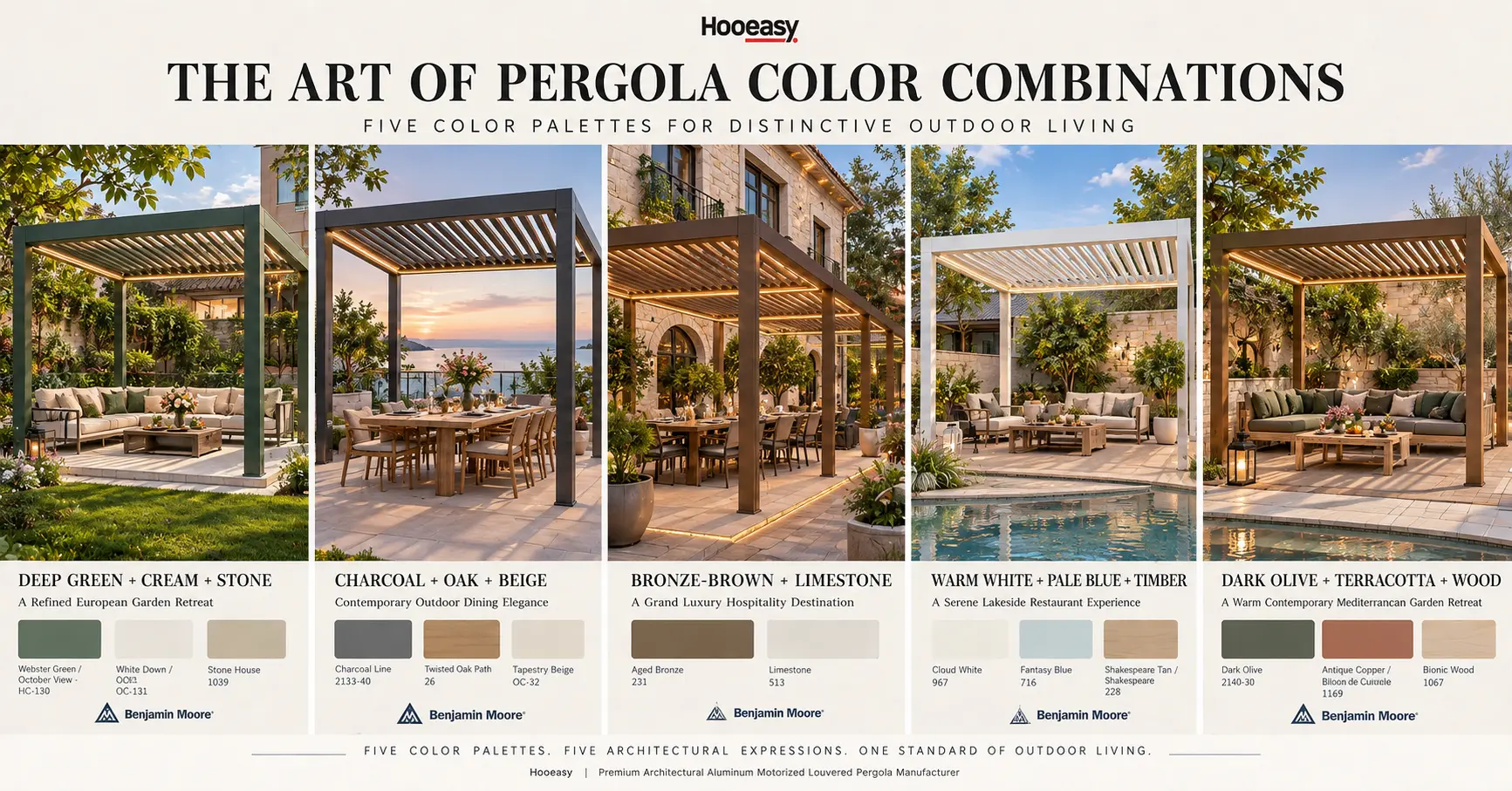
4. Which Materials Work Best with Richer Pergola Colors?
Color establishes the first impression, but materials determine how the design feels when viewed up close.
Aluminum: The Structural Foundation
Aluminum pergolas offer a contemporary architectural appearance and can support a range of finish directions, depending on the manufacturer’s product specifications.
For B2B buyers, evaluate the coating system, surface preparation, corrosion-resistance requirements, sample consistency, and suitability for the intended installation environment.
Do not assume that a color used for an indoor wall is automatically an appropriate specification for an outdoor aluminum structure.
Wood and Wood-Look Finishes: Adding Warmth
Timber and wood-look materials can soften the appearance of a metal frame. They work particularly well with deep green, charcoal, and bronze-brown tones.
For commercial projects, compare maintenance requirements, durability, UV exposure, and the consistency of the selected wood tone across different components.
Stone and Mineral Textures: Creating Visual Balance
Limestone, travertine-inspired surfaces, textured paving, and other mineral finishes provide a natural counterpoint to smooth metal profiles.
Light-colored stone can help balance a darker structure, while deeper stone tones can produce a more dramatic architectural composition.
Outdoor Upholstery and Accessories: Flexible Accent Colors
Furniture, cushions, rugs, planters, and accessories are often the easiest elements to update when design preferences change.
For brands serving multiple markets, this offers a practical way to introduce trend-led colors without changing the core pergola frame specification for every collection.
5. How to Choose a Pergola Color for Different Markets
For manufacturers, importers, and distributors, the best color strategy is not necessarily to follow every annual trend. It is to balance visual differentiation with production practicality and the preferences of the target market.
North America
A versatile core collection can combine dark architectural finishes with warmer neutral options. Design-led customers may also respond to nature-inspired colors when they complement the house exterior and landscape.
Europe
Architectural context, material coordination, and the overall appearance of the outdoor space should guide color selection. A muted, natural palette may work well in some projects, while hospitality or contemporary residential concepts may call for more expressive finishes.
Australia and Other Sun-Exposed Markets
Evaluate the entire product specification for local exposure conditions. Color selection should be considered alongside coating performance, thermal comfort, installation requirements, and the manufacturer’s applicable technical documentation.
Hospitality and Commercial Projects
For hotels, restaurants, resorts, and outdoor dining venues, a distinctive frame color may reinforce a property’s design identity. Repeatability matters: buyers should confirm approved samples, finish codes, production tolerances, and replacement-order consistency.
These are design and procurement considerations, not universal claims about the most popular colors in each region. Actual demand should be validated against customer feedback, local projects, and sales data.
6. What Should B2B Buyers Ask a Pergola Manufacturer Before Choosing a Custom Color?
For importers, distributors, and private-label brands, a color concept must eventually become a repeatable production specification.
Before placing an order, ask the manufacturer the following questions:
- Which frame colors are standard? Request the current standard finish list and physical samples.
- Can custom colors be produced? Confirm whether the supplier supports the required powder-coated finish and whether the requested color is technically suitable for the product.
- What is the minimum order quantity? Custom finishes may involve different production requirements or additional costs.
- How is color consistency controlled? Ask how samples are approved and how finished products are checked against the agreed specification.
- What coating documentation is available? Review the relevant technical data, test reports, and environmental suitability information for the intended application.
- Can the finish be repeated for future orders? Confirm how specifications, approved samples, and finish references are recorded.
- What is the impact on lead time? Establish whether a custom finish changes sampling, production scheduling, or delivery arrangements.
- Can the supplier support private-label requirements? If applicable, discuss branding, packaging, product configuration, and documentation.
For projects involving motorized louvered pergolas, buyers should also evaluate frame design, drainage, motor operation, installation requirements, and relevant structural performance evidence. Color should enhance a suitable product specification, not replace it.
Hooeasy provides an entry point for B2B buyers exploring pergola products and solutions. For specific finish availability, customization requirements, and order conditions, confirm the details directly with the supplier.
7. How Pergola Manufacturers Can Turn the 2027 Color Trend into a Product Opportunity
For a pergola brand or distributor, a color trend is most valuable when it can be translated into a commercially useful product offer.
Rather than creating a completely new product for every trend, consider three practical approaches.
Build a Core Color Collection
Establish a small, clearly documented range of standard finishes. A focused collection can simplify product presentation, sampling, purchasing, and inventory planning.
The actual colors should be selected using market demand, product capability, and production feasibility rather than trend coverage alone.
Offer Customization Where It Creates Value
Custom finishes can help a private-label brand differentiate its collection or align a pergola with a particular architectural project.
Before offering customization, assess minimum quantities, sampling costs, finish availability, lead times, and the likelihood of repeat demand.
Market the Complete Outdoor Living Scene
Customers do not experience a pergola as an isolated frame. They see a complete setting made up of architecture, flooring, furniture, planting, lighting, and shade.
For B2B marketing, use application-led visuals that demonstrate how the pergola fits into the overall project. Pair those visuals with clear product information, technical specifications, and sourcing details.
Hooeasy’s broader company profile provides additional context for buyers evaluating a manufacturing partner. For product-specific information, customization discussions, or project requirements, use the Hooeasy contact page.
8. Frequently Asked Questions About 2027 Pergola Color Trends
What is Benjamin Moore’s Color of the Year 2027?
Benjamin Moore announced Webster Green HC-130 as its 2027 Color of the Year on October 14, 2026. The classic green anchors the brand’s Color Trends 2027 palette of eight colors.
Official source: Benjamin Moore Color of the Year 2027.
Is Webster Green a good color for a pergola?
Webster Green can inspire a nature-led pergola design, especially when paired with warm wood, pale stone, cream-colored surfaces, and greenery. However, its suitability as an actual pergola finish depends on product availability, coating specifications, architectural context, and customer preferences.
What pergola colors are worth considering for 2027?
Useful design directions include deep green-inspired finishes, charcoal, bronze-brown, warm white, and other natural or warm-toned colors. The best choice depends on the surrounding architecture, intended market, available finishes, and the desired visual effect.
What colors make a pergola look more premium?
A cohesive palette, well-considered proportions, realistic material textures, and coordinated finishes generally contribute more to a premium appearance than a single color. Charcoal with warm wood, deep green with pale stone, and bronze-brown with neutral materials are useful starting points.
Should I choose a dark or light aluminum pergola?
Dark finishes can create a strong architectural outline and contrast with lighter surroundings. Light finishes can produce a visually softer, more open appearance. Consider the building facade, landscape, climate, maintenance expectations, and product specifications before making a decision.
Can I order a custom-color aluminum pergola from a manufacturer in China?
Some manufacturers support custom finishes, but availability varies. Buyers should confirm minimum order quantities, sampling arrangements, coating specifications, lead times, and color consistency directly with the supplier before placing an order.
What should importers check when sourcing a colored pergola?
Evaluate the manufacturer’s product specifications, finish options, quality-control process, relevant technical documentation, production capacity, customization capabilities, and ability to maintain consistent specifications across repeat orders.
Does the 2027 color trend mean neutral pergolas are going out of style?
No. The announcement of a richer green palette is a source of design inspiration, not evidence that neutral pergolas are losing demand. Neutral finishes remain useful because of their versatility. Brands can test richer colors through samples, customer research, and limited product offerings before expanding a collection.
Conclusion: Design with Character, Specify with Confidence
The 2027 color conversation, led by Webster Green HC-130, offers an opportunity to rethink how color contributes to outdoor architecture.
For pergola design, the most useful lesson is not to replace every neutral finish with a fashionable green. It is to create more intentional relationships between the structure, materials, landscape, and surrounding building.
For B2B buyers, that design vision must also translate into practical specifications: available finishes, sample approval, coating suitability, production consistency, customization conditions, and repeat-order reliability.
For manufacturers and outdoor living brands, a well-planned color collection can become part of a broader product strategy—one that combines architectural appeal with clear specifications and dependable sourcing.
Planning a pergola collection for 2027? Explore Hooeasy pergola solutions or contact the team to discuss your project requirements, finish options, and B2B customization needs.
Editorial note: Webster Green HC-130 and the Color Trends 2027 palette are referenced for design inspiration. Benjamin Moore is an independent brand; this article does not imply endorsement, partnership, or availability of an identical finish for Hooeasy products. Confirm product specifications and finish options with the manufacturer.