
Why Smart Shading Systems Matter in 2026
As global temperatures continue to rise and extreme heat waves become more frequent, the way we design and use outdoor and semi-outdoor spaces is rapidly evolving. Architects, developers, and commercial property owners are no longer treating shading as a secondary feature—it is now a critical component of building performance and user experience.
A modern smart shading system plays a direct role in reducing indoor heat gain, improving energy efficiency, and enhancing outdoor usability. Studies show that advanced louvered systems can reduce heat accumulation by 40–60%, significantly lowering air conditioning demand. This is especially important as governments and industries push toward carbon neutrality and sustainable building practices.
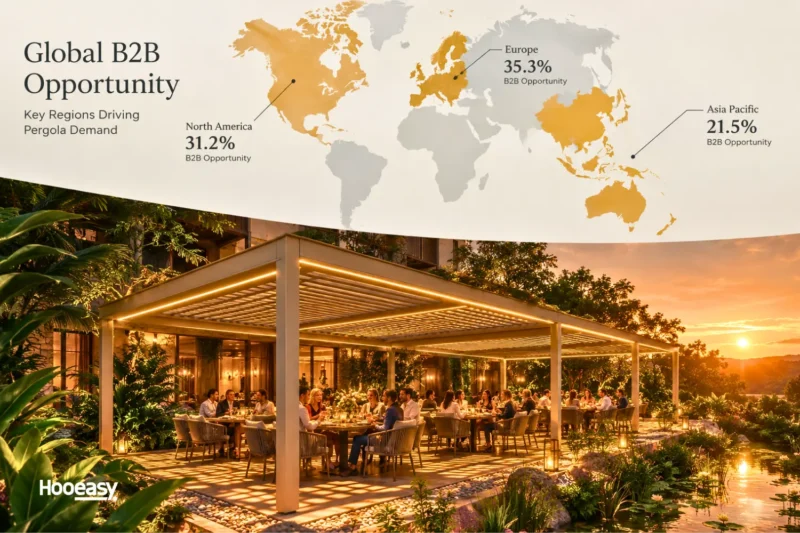
At the same time, the commercialization of outdoor spaces—such as restaurant terraces, hotel lounges, and rooftop bars—is booming. Businesses are seeking outdoor shading solutions that allow them to operate comfortably in all weather conditions, extending operating hours and increasing revenue potential.
Smart shading is no longer optional—it’s a key part of modern architecture.
What Is a Smart Shading System?
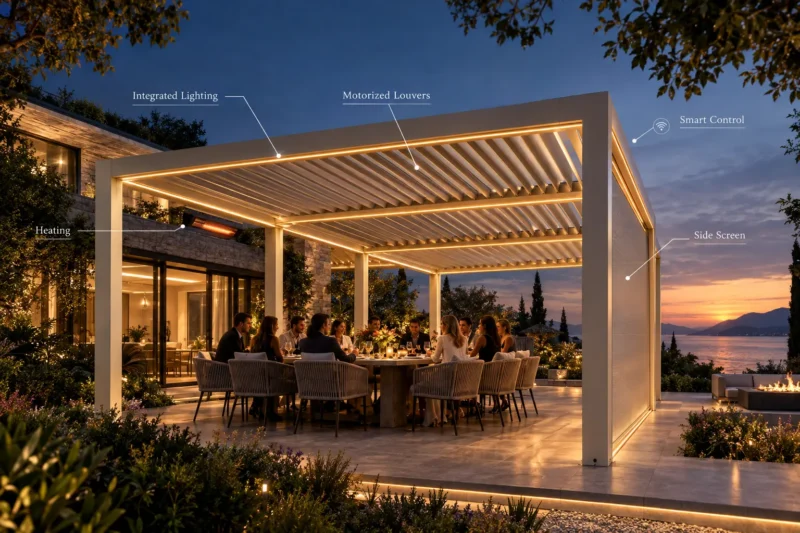
A smart shading system is an integrated outdoor structure that combines mechanical design, automation, and intelligent control to regulate sunlight, airflow, and weather exposure in real time.
The most common form is the smart pergola system, also known as a motorized pergola system, which features adjustable louvers and automated controls.
Core Components
- Structural System (Aluminum Framework)
High-strength aluminum profiles form the backbone of the system, ensuring durability and stability under various environmental conditions.
- Drive System (Motorization)
Electric motors—typically tubular or linear actuators—enable smooth and precise movement of louvers.
- Control System (IoT Integration)
Users can operate the system via remote control, mobile apps, or voice assistants.
- Sensor System (Environmental Detection)
Advanced smart pergola sensors detect wind, rain, and sunlight, allowing automatic adjustments.
These components work together to create a dynamic outdoor environment where light, shade, and ventilation are optimized continuously.

Key Technical Parameters Explained
Understanding pergola technical parameters is essential for architects, engineers, and project developers. Below are the most critical specifications that define performance and reliability.
- Louver Angle & Sunlight Control
One of the defining features in louvered pergola specifications is the adjustable louver angle, typically ranging from 0° to 135°.
0°(closed): Full shade and watertight seal
45°–90°: Balanced light and ventilation
135°(Fully Open): Maximum sunlight exposure
This flexibility allows precise control over microclimates, optimizing comfort throughout the day.
Key Value:
A well-designed smart pergola system can adapt instantly to changing sunlight conditions, improving both comfort and energy efficiency.

- Wind Resistance & Structural Load
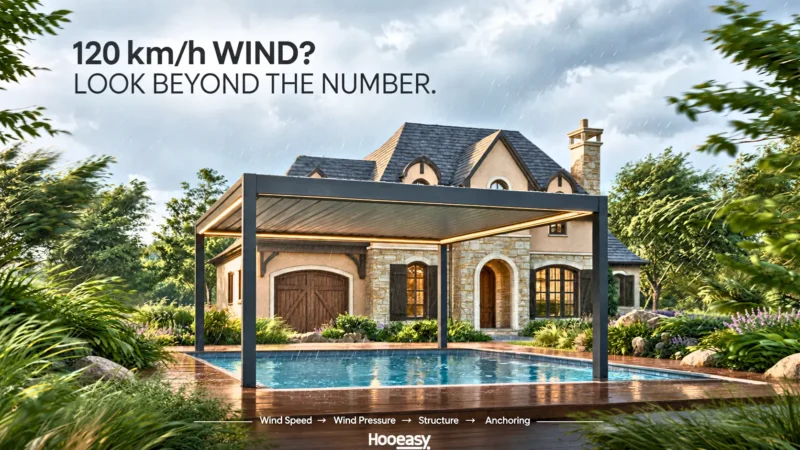
For commercial and large-scale projects, wind resistance pergola performance is a critical safety factor.
- Engineered to withstand high wind loads (often up to Beaufort scale 10–12 depending on design)
- Structural calculations ensure compliance with local building codes
- Reinforced beams and anchoring systems improve stability
Pergola Load Capacity is equally important:
- Snow load and additional fixtures must be considered
- Load-bearing capacity directly impacts long-term safety
Why It Matters for B2B Projects:
- Ensures compliance with regulations
- Reduces liability risks
- Guarantees operational safety in extreme conditions
- Waterproof Performance & Drainage System
A high-quality waterproof pergola system ensures usability even during heavy rain.
Key Features:
- Interlocking louver design for tight sealing
- Integrated gutter systems
- Concealed drainage channels within columns
Rainwater is efficiently directed away from the structure, preventing leakage and water accumulation.
Core Advantage:
True all-weather usability—critical for restaurants and hospitality businesses.

- Motor System & Automation Technology
The motor is the heart of any motorized pergola system.
Common Motor Types:
- Tubular motors (compact, widely used)
- Linear actuators (higher precision and load capacity)
Control Options:
- Remote control
- Mobile app (iOS/Android)
- Voice control (via smart home systems)
Emerging Technologies:
- Zigbee connectivity
- WiFi-enabled systems
- Matter protocol for smart home compatibility
These technologies are transforming pergolas into intelligent, connected systems.
- Smart Sensors & Automation Logic
Modern smart pergola sensors enable automated responses based on environmental conditions.
Typical Automation Logic:
- If rain → Louvers close automatically
- If strong sunlight → Louvers tilt to reduce heat
- If high wind → System enters safety mode
This automation enhances both safety and convenience, reducing the need for manual operation.
Key Benefit:
A seamless, responsive outdoor environment that adapts in real time.
- Material & Durability
Material selection directly impacts performance and lifespan.
Most high-end systems use:
- 6063 aluminum alloy
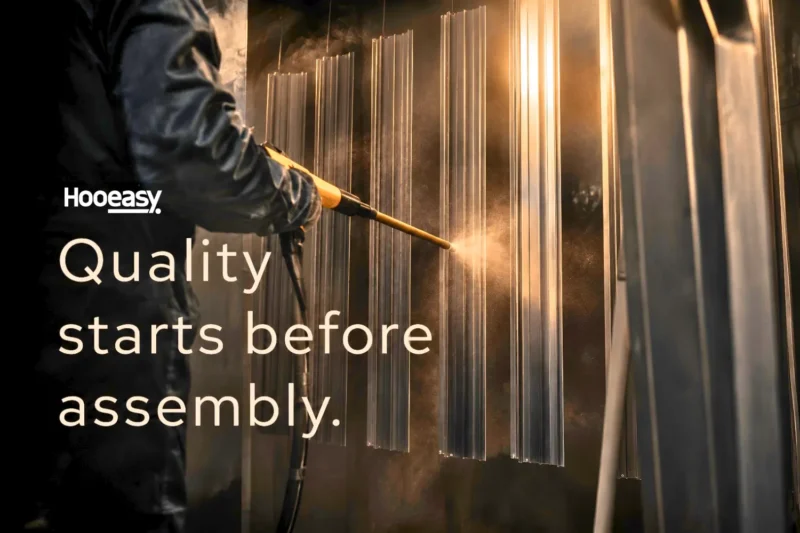
- Powder-coated finishes for corrosion resistance
- UV-resistant coatings to prevent fading
Aluminum Pergola Durability:
- Resistant to rust and corrosion
- Minimal maintenance required
- Lifespan of 15–20 years or more
This makes aluminum the preferred choice for long-term outdoor installations.

- Energy Efficiency & Sustainability
Sustainability is one of the biggest drivers behind the adoption of outdoor shading solutions.
Performance Data:
- Blocks 85–95% of direct sunlight
- Reduces indoor cooling demand significantly
- Supports passive building design strategies
By integrating a smart shading system, buildings can:
- Lower energy consumption
- Improve thermal comfort
- Meet green building certifications
Smart Pergola vs Traditional Shading Systems
| Feature | Traditional Shading | Smart Pergola System |
| Control Method | Manual | Automated |
| Weather Adaptability | Limited | Fully adaptive |
| Durability | Moderate | High |
| User Experience | Basic | Premium |
| Commercial Value | Low | High |
A smart pergola system clearly outperforms traditional shading in both functionality and business value.
Applications in Commercial Projects
The adoption of smart shading systems is rapidly growing across commercial sectors.
Key Applications:
Restaurant Terraces
Enable year-round outdoor dining regardless of weather conditions.
Hotel Outdoor Spaces
Enhance guest experience with flexible shading and climate control.
Rooftop Bars
Create dynamic environments that adapt from day to night.
Parking Areas
Provide protection for vehicles while maintaining airflow.
Business Impact:
- Extended usable hours
- Increased seating capacity
- Higher customer satisfaction
- Greater revenue generation
 Smart Pergola System in Commercial Restaurant TerraceHow to Choose the Right Smart Shading SystemSelecting the right system requires a clear understanding of project requirements.
Buyer Checklist:
- Wind Load Requirements → Choose appropriate wind resistance pergola rating
- Size & Layout → Ensure structural feasibility
- Control System → App, remote, or full smart integration
- Project Type → Residential vs commercial applications
- Budget vs Performance → Balance cost and long-term value
Working with experienced manufacturers ensures that all pergola technical parameters are properly configured for your project.
Future Trends of Smart Outdoor Living
The future of shading systems lies in integration and intelligence.
Key Trends:
- Smart Home Integration
Pergolas becoming part of unified smart ecosystems.
- Climate-Adaptive Architecture
Buildings that automatically respond to environmental changes.
- Outdoor Living Economy
Growing demand for functional, comfortable outdoor spaces.
- Data-Driven Performance
Sensors and analytics optimizing energy use and comfort.
Shading systems are evolving from static structures into intelligent building components.
Conclusion: From Shade to Smart Outdoor Experience
The role of shading has evolved dramatically:
From Shade → Comfort → Experience → Business Value
A modern smart shading system is no longer just about blocking sunlight—it is about creating adaptable, efficient, and profitable outdoor environments.
For developers, architects, and business owners, investing in a high-performance smart pergola system means gaining a competitive edge in both design and functionality.
Looking for a Reliable Smart Pergola Manufacturer?
Hooeasy specializes in high-quality awnings and pergolas, offering:
- OEM / ODM customization
- Full project support
- Advanced motorized pergola systems
- Global delivery capabilities
Explore more at:
Whether you’re planning a commercial project or upgrading outdoor spaces, Hooeasy provides tailored outdoor shading solutions designed for performance, durability, and smart living.
 Smart Pergola System in Commercial Restaurant TerraceHow to Choose the Right Smart Shading SystemSelecting the right system requires a clear understanding of project requirements.