
Sunlight, Movement, and Blood Sugar: How Outdoor Spaces Support a Healthier Lifestyle
Introduction: The Growing Concern Around Blood Sugar and Modern Lifestyles
Modern lifestyles have dramatically changed how people move, work, and spend their time. Many individuals now spend long hours indoors—working at desks, commuting, or using digital devices. As a result, daily physical movement and exposure to natural sunlight have gradually decreased.
At the same time, awareness of metabolic health is growing worldwide. Topics such as blood sugar balance, energy levels, and overall well-being are no longer limited to healthcare discussions. They are increasingly part of everyday lifestyle conversations.
Rather than relying only on complex solutions, researchers and wellness experts are paying closer attention to simple daily habits that may support long-term health. Spending more time outdoors, receiving moderate sunlight, and engaging in light physical activity are now widely recognized as beneficial lifestyle practices.
This growing awareness has also shifted attention to an often-overlooked factor: the environments where people live and spend their time. Outdoor spaces that encourage movement, relaxation, and exposure to natural light may play an important role in supporting healthier routines.
Sunlight and Blood Sugar: What Research Suggests
The Role of Vitamin D
Sunlight plays a crucial role in the body’s natural production of vitamin D, an essential nutrient involved in multiple biological processes.
Several studies suggest that vitamin D may support insulin sensitivity and metabolic regulation, which are important factors related to blood sugar balance. While sunlight itself is not a medical treatment, adequate exposure to natural light has been linked to improved metabolic responses in some individuals.
From a broader perspective, sunlight exposure may influence:
- metabolic regulation
- hormonal balance
- energy utilization
These findings help explain why lifestyle practices that include regular outdoor exposure are increasingly recommended as part of a balanced daily routine.
Circadian Rhythm and Metabolism
Beyond vitamin D, sunlight also plays an important role in regulating the body’s circadian rhythm—often referred to as the internal biological clock.
This rhythm influences when people feel awake, when they feel tired, and even how the body processes nutrients throughout the day. Natural daylight helps synchronize this internal system by signaling when it is time to wake, eat, and rest.
In simple terms:
- daylight helps regulate the body clock
- the body clock influences metabolism
- metabolism affects how the body manages glucose
Consistent exposure to natural light—especially in the morning—may help maintain a stable daily rhythm, supporting more balanced energy use throughout the day.
Why Light Exercise Matters for Blood Sugar
Muscles Use Glucose as Energy
Physical movement plays a direct role in how the body manages glucose. When the body moves, muscles require energy—and glucose becomes one of the primary fuels used by the body.
During light to moderate activity:
- muscles consume glucose
- blood sugar levels may gradually decrease
- insulin sensitivity may improve
The good news is that beneficial movement does not always require intense workouts. Simple activities such as walking, stretching, yoga, or light cycling can support daily balance when practiced regularly.
In fact, consistency often matters more than intensity when it comes to long-term lifestyle habits.
Outdoor Exercise May Bring Additional Benefits
When physical activity takes place outdoors, the benefits may extend beyond movement alone.
Outdoor exercise combines physical activity, fresh air, and natural sunlight, creating a more holistic wellness experience. Many people report additional advantages such as:
- improved mood
- reduced stress
- increased motivation to stay active
Natural environments also help reduce stress levels, which is important because elevated stress hormones can influence how the body regulates glucose.
For this reason, outdoor wellness spaces are becoming an increasingly important part of modern lifestyle design.
The Role of Outdoor Spaces in Supporting Healthy Habits
As awareness of wellness grows, people are beginning to rethink how their living environments support daily habits.
Outdoor spaces are no longer seen only as decorative extensions of a home. Instead, they are becoming active lifestyle environments that encourage movement, relaxation, and social interaction.
Well-designed outdoor areas can naturally promote healthier routines by making it easier and more enjoyable to spend time outside.
Common examples include:
- patios
- terraces
- gardens
- backyard relaxation areas
When thoughtfully designed, these spaces become natural extensions of the home—places where people can stretch, walk, practice yoga, or simply enjoy quiet moments surrounded by fresh air and natural light.
Creating Comfortable Outdoor Environments with Shaded Structures
While spending time outdoors offers many benefits, comfort remains essential. Prolonged exposure to strong sunlight or heat can discourage people from using outdoor spaces regularly.
For outdoor environments to truly support daily wellness activities, they must provide the right balance of sunlight, shade, and ventilation.
This is where architectural structures such as pergolas become particularly valuable.
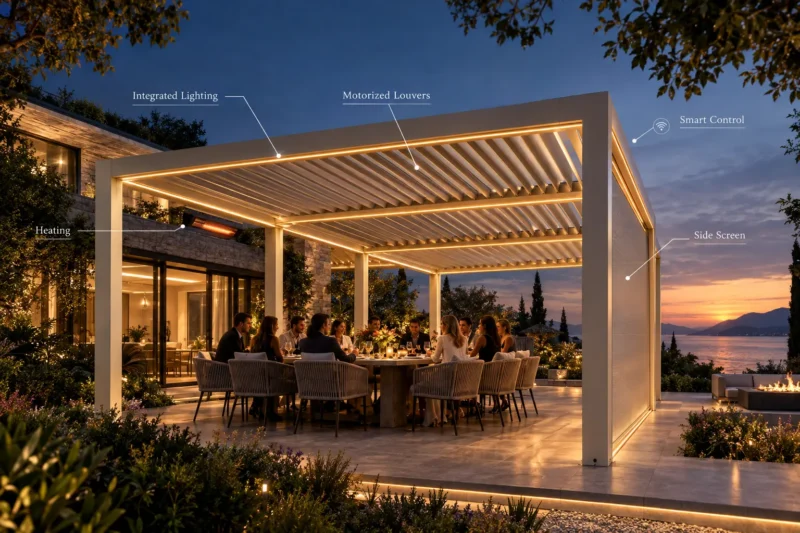
Modern pergola systems allow homeowners and designers to create shaded outdoor zones while maintaining an open and airy atmosphere. Adjustable louvers and durable structures help control sunlight exposure while still allowing natural airflow.
By creating comfortable shaded areas, pergolas extend the usability of outdoor spaces and make them more inviting throughout the day.
Everyday Wellness Activities Under a Pergola
A thoughtfully designed pergola can support a wide range of daily activities that contribute to both physical and mental well-being.
Morning Stretching or Yoga
Gentle movement combined with soft morning sunlight can create a refreshing start to the day.

Practicing yoga or stretching outdoors allows people to enjoy natural light and fresh air while maintaining a calm and balanced routine.
Walking or Mobility Exercises
Simple movements such as walking or stretching in a backyard environment help maintain flexibility and encourage consistent physical activity.

Even short sessions of movement can contribute to better daily wellness.
Outdoor Reading or Relaxation
Mental well-being is just as important as physical health. Spending quiet time outdoors can help reduce stress and improve focus.

A shaded pergola space creates a peaceful environment for reading, meditation, or simply enjoying nature.
Enjoying Light and Shadow Design
Beyond functionality, pergolas also enhance the aesthetic experience of outdoor spaces. Sunlight filtering through adjustable louvers creates beautiful patterns of light and shadow.

These visual elements add warmth and character to outdoor living environments.
Social Activities and Family Time
Outdoor spaces also encourage connection. Gathering with friends or family promotes relaxation, conversation, and shared experiences.

A comfortable shaded environment allows people to spend longer periods outdoors together.
Outdoor Wellness Is Becoming a Lifestyle Trend
In recent years, a growing number of homeowners and designers have embraced the concept of wellness-focused living environments.
This trend is closely connected to biophilic design, an architectural approach that emphasizes integrating natural elements into everyday spaces.
More people are prioritizing:
- outdoor living areas
- natural light access
- flexible spaces for relaxation and activity
Following global lifestyle shifts, especially after the pandemic, many individuals now place greater value on spending time outdoors.
As a result, outdoor shading structures such as pergolas have become increasingly popular in residential design, helping transform terraces, patios, and gardens into comfortable wellness environments.
Companies like Zhejiang Hooeasy Technology Co., Ltd. contribute to this trend by providing pergola and shading solutions designed to support modern outdoor living.
Conclusion
Creating a healthier lifestyle does not always require dramatic changes. Often, it begins with simple daily habits—getting moderate sunlight, staying physically active, and spending more time outdoors.
The relationship between sunlight, movement, and overall well-being highlights how everyday routines can influence long-term health.
While sunlight and light physical activity cannot replace professional medical advice, environments that encourage outdoor living may help support healthier daily habits.
Thoughtfully designed outdoor spaces—especially those that combine natural light with comfortable shade—make it easier for people to relax, move, and reconnect with nature.
Structures such as pergolas help transform ordinary patios, terraces, and gardens into versatile environments where daily life naturally includes fresh air, gentle movement, and moments of calm.
As outdoor living continues to evolve, the future of wellness may depend not only on what people do, but also on the spaces that inspire them to do it.