
Every heatwave leaves a bill. These are two readings from the global climate-health record — one acute regional event, one long-run annual baseline.
0
Estimated heat-related excess deaths in the European Region during summer 2022
0
Estimated heat-related deaths globally, each year (2000–2019 average)
Heat is no longer just a summer inconvenience.
It is a design challenge.
Introduction: The Heatwave Is No Longer Just a Weather Story
On a hot summer afternoon, the difference between a paved terrace in direct sunlight and a shaded outdoor space isn’t simply a matter of comfort. It can determine whether people stay, rest, socialize—or retreat indoors.
The numbers tell an urgent story. Globally, approximately 489,000 heat-related deaths occur each year, with the WHO European Region accounting for 36%—more than 175,000 deaths annually. In Europe alone, during the summer of 2022, an estimated 61,672 heat-related excess deaths were recorded. The WHO European Region is the fastest-warming of the six WHO regions, with temperatures rising at around twice the global average rate.
Extreme heat does not affect everyone equally. Older adults, children, people with chronic conditions, outdoor workers, and urban populations without access to cooling are disproportionately vulnerable.
Heat stress is the leading cause of weather-related deaths and can exacerbate underlying illnesses including cardiovascular disease, diabetes, mental health, asthma, and can increase the risk of accidents. Heat-related mortality for people over 65 years of age increased by approximately 85% between 2000–2004 and 2017–2021. Over the past 20 years, there has been a 30% increase in heat-related mortality across the European Region.
The question is no longer whether outdoor spaces need shade. The question is how much shade we should be designing into them.
Heat Is More Than an Uncomfortable Temperature
Heat stress affects the human body
When we talk about extreme heat, we are not simply discussing discomfort. The human body has a narrow operating temperature range, and when ambient temperatures rise beyond what it can regulate, the consequences are physiological—not psychological.
Heat health risks include:
- Dehydration — fluid loss that impairs cognitive and physical function
- Heat exhaustion — characterized by heavy sweating, weakness, and nausea
- Heatstroke — a medical emergency with a high-case fatality rate
- Cardiovascular stress — the heart works harder to pump blood to the skin for cooling
- Respiratory stress — hot air can aggravate breathing difficulties
- Sleep disruption — elevated nighttime temperatures prevent restorative sleep
Temperature extremes exacerbate chronic conditions, including cardiovascular, respiratory and cerebro-vascular diseases, mental health, and diabetes-related conditions.
Heat can trigger exhaustion and heat stroke, and can aggravate existing conditions—such as cardiovascular, respiratory, kidney or mental diseases.
Extreme heat affects vulnerable groups first
A shaded bench may look like a small design decision. For an older person during a heatwave, it can determine whether a walk through a park is possible at all.
The populations most at risk include:
- Older adults — especially those living alone
- Children and infants — their bodies are less efficient at regulating temperature
- People with chronic conditions — cardiovascular disease, diabetes, respiratory illness, kidney disease
- Pregnant women — extreme heat linked to adverse pregnancy outcomes such as preterm birth and low birth weight
- Outdoor workers — prolonged exposure during peak heat hours
- People without access to cooling — those who cannot afford or access air conditioning
- Urban populations — cities trap heat more effectively than rural areas
The Hidden Heat Problem: Outdoor Spaces Can Become Heat Traps
This is where the conversation moves from health to design. The Urban Heat Island Effect is one of the most underappreciated factors in outdoor space planning.
Urban areas—with their concentration of concrete, asphalt, glass, roofing, paved terraces, and parking areas—absorb and re-emit the sun’s heat far more than natural landscapes such as forests and water bodies.
According to the EPA, daytime temperatures in urban areas are about 1–7°F (0.6–3.9°C) higher than temperatures in outlying areas, and nighttime temperatures are about 2–5°F higher.
Why hard surfaces make outdoor spaces hotter
Paving, concrete, and roofing materials absorb solar radiation during the day and release it slowly at night.
This means that even after the sun goes down, outdoor spaces in urban environments remain uncomfortably warm.
The cumulative effect is that cities become “heat islands” of higher temperatures relative to outlying areas.
Why sunlight exposure matters
Direct sunlight on the human body increases thermal load dramatically.
It is not just the air temperature that matters—it is the radiant heat from the sun striking skin, clothing, and surrounding surfaces.
This is why two outdoor spaces with the same air temperature can feel completely different: one in full sun, one in shade.
Why shade changes the experience of heat
Shade reduces direct solar exposure and can significantly improve thermal comfort, even when the surrounding air temperature remains high.
This distinction is crucial. Shade does not necessarily lower the ambient air temperature by a dramatic margin.
What it does is remove the direct radiant heat load on the human body.
The result is a space that feels cooler, more comfortable, and more usable—even on the hottest days.
Shade Is Not Just About Comfort—It Is a Health Intervention
This is the most important chapter of this article. The conversation needs to shift from:
Shade = Comfort → Shade = Health + Safety + Accessibility + Usability
1. Shade reduces direct solar exposure
Solar radiation is a primary contributor to human heat load.
When the body is exposed to direct sunlight, it absorbs radiant energy that must be dissipated through sweating and other cooling mechanisms.
Shade for heatwaves interrupts this process at the source. By blocking direct solar radiation, shade reduces the physiological burden on the body, making it easier to maintain a safe core temperature.
2. Shade makes outdoor activities more tolerable
Consider the range of activities that happen outdoors: walking, sitting, dining, exercising, socializing, waiting, relaxing.
Each of these activities becomes more difficult—and in some cases dangerous—when conducted under direct sunlight during a heatwave.
Outdoor heat protection through shade allows these activities to continue safely.
3. Shade can help people stay outdoors longer
A space only creates value when people can actually use it.
When outdoor spaces are exposed to direct sunlight during peak heat hours, they become unusable.
People retreat indoors. The space becomes a visual amenity rather than a functional one. Shaded outdoor spaces extend the hours and seasons during which outdoor areas can be actively used.
4. Shade supports healthier outdoor living
The chain works like this:
Shade → Comfort → Longer Stay → More Outdoor Activity → Better Outdoor Experience → Outdoor Wellness
When people can comfortably spend time outdoors, they benefit from fresh air, social connection, physical activity, and relaxation. These are not luxuries—they are components of outdoor wellness that contribute to overall health and quality of life.
From Trees to Pergolas: Building a Layered Shade Strategy
The future of outdoor cooling is not a single solution. It is layered.
Layer 1 — Natural Shade
Trees, vegetation, and green spaces are among the most effective tools for reducing local temperatures.
The EPA identifies trees and vegetation as a key strategy for reducing the urban heat island effect, as they provide shade and cool the air through evapotranspiration. Strategic planting of deciduous trees can shade outdoor spaces during summer while allowing sunlight through in winter.
Layer 2 — Architectural Shade
This is where shade structures and pergolas enter the picture. Architectural shading systems—pergolas, canopies, covered terraces—provide consistent, predictable shade that can be designed to match specific spatial and aesthetic requirements.
Unlike trees, architectural shade can be precisely positioned to address solar orientation and specific usage patterns.
Layer 3 — Flexible Shade
The most sophisticated outdoor spaces incorporate flexibility. Retractable and adjustable pergola systems allow users to control the amount of shade based on time of day, season, and activity. This is particularly valuable for:
- Backyards and patios
- Pools and garden areas
- Outdoor dining spaces
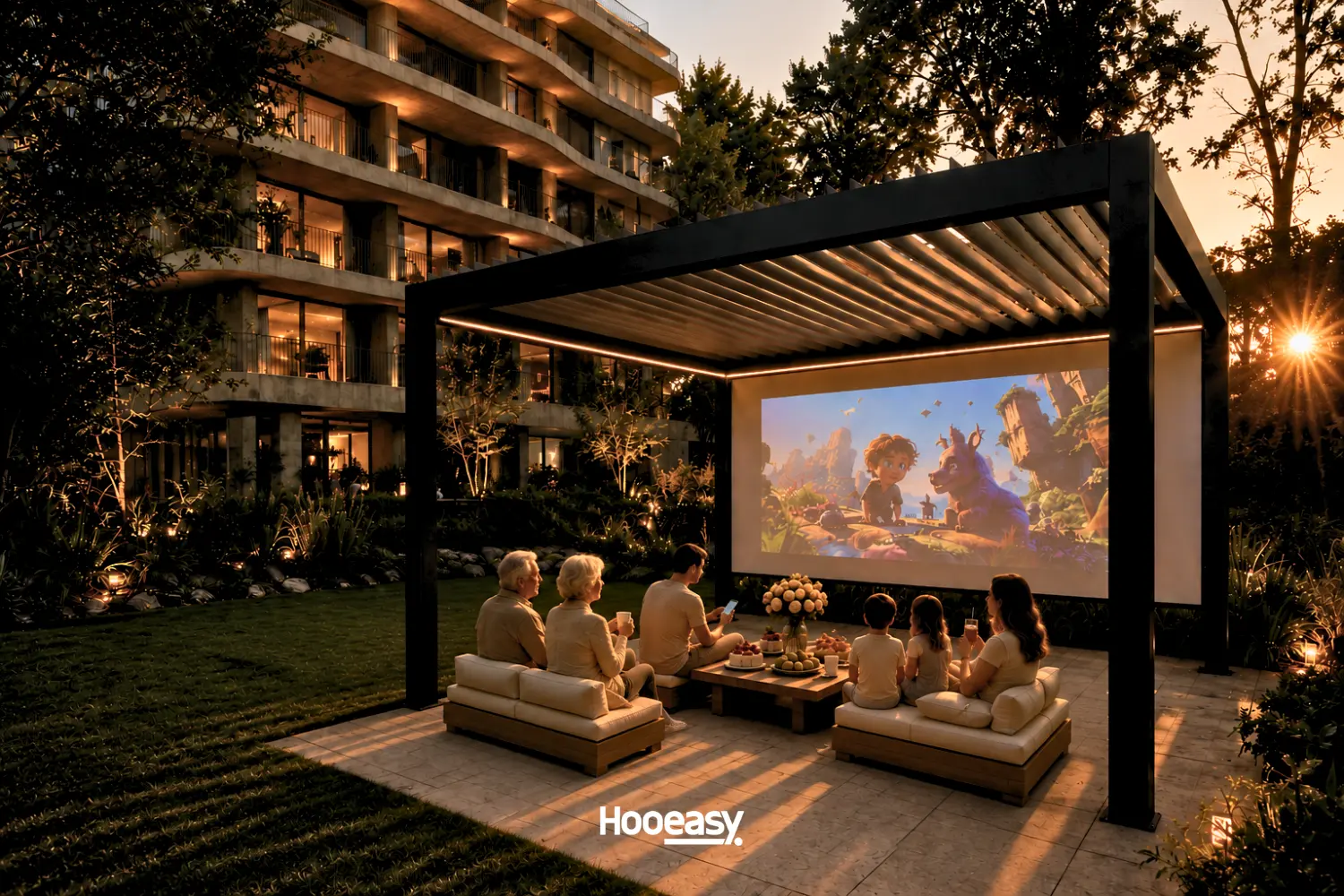
- Family gathering areas
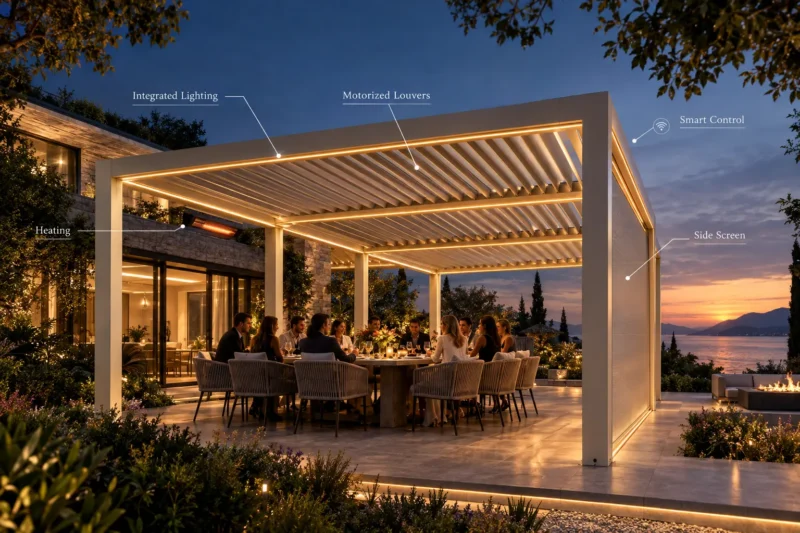
A pergola isn’t simply an extension of the house. It can become a shaded outdoor room—a space that transitions seamlessly between indoor comfort and outdoor experience.
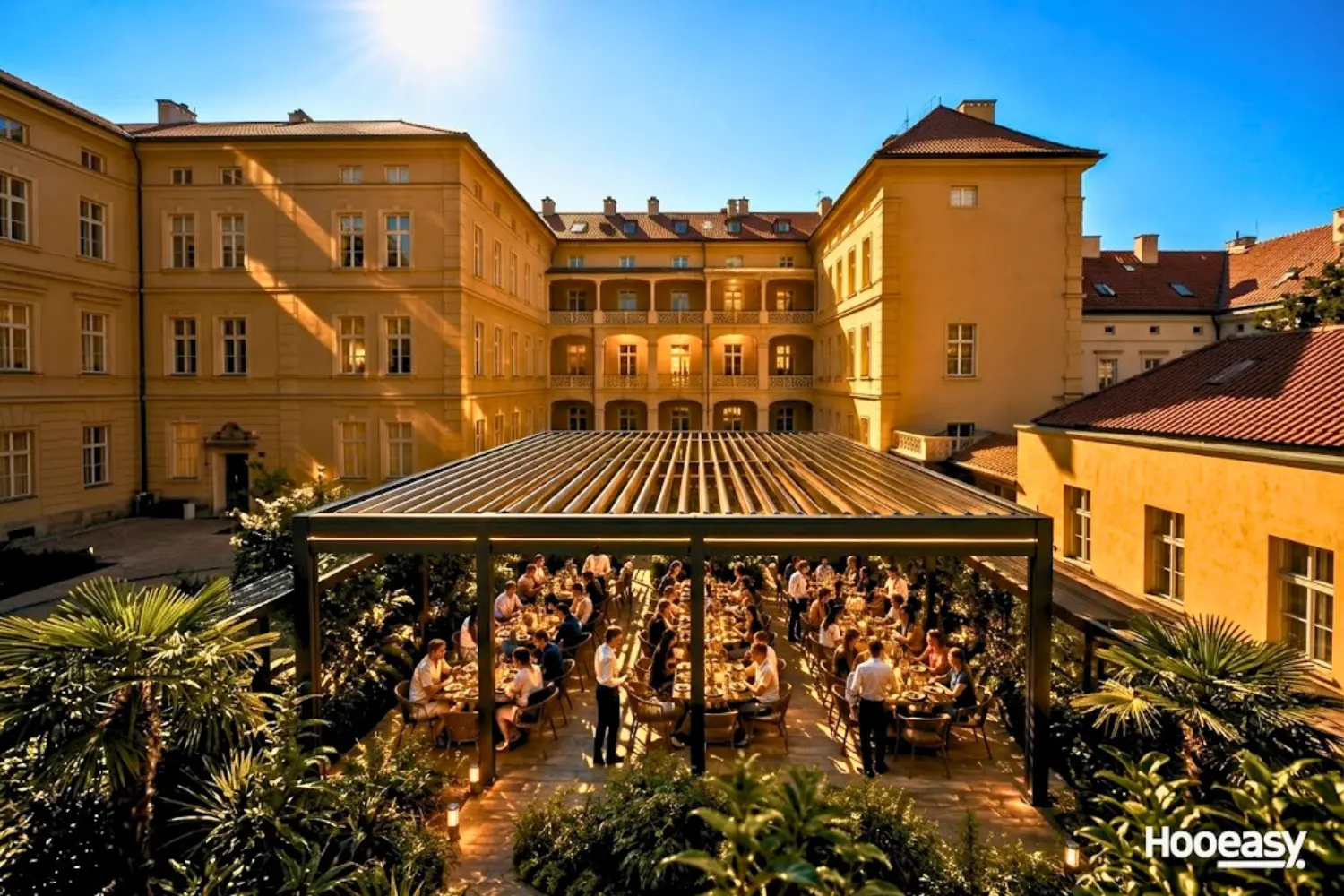
For Restaurants & Hospitality
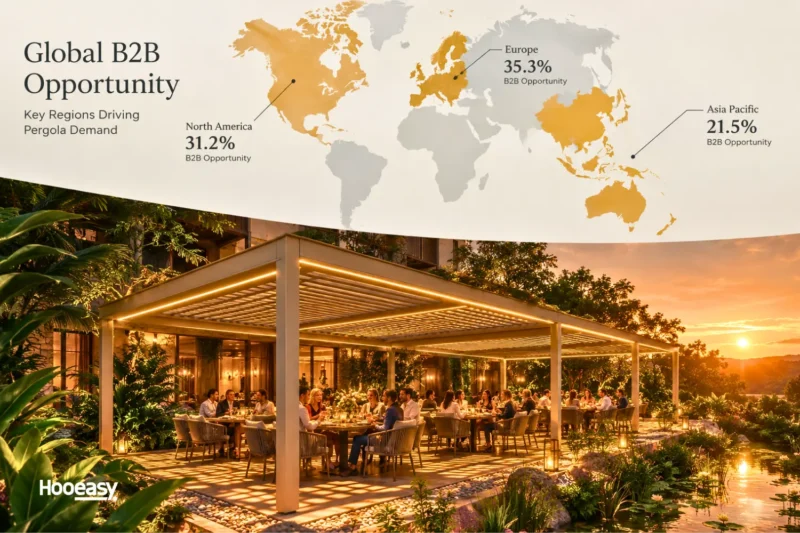
This is one of the most compelling commercial applications for shade solutions for restaurants and hotels.
Without shade:
- Terrace becomes too hot to use during peak hours
- Customers leave or choose indoor seating
- Fewer seats are usable
- Outdoor dining becomes seasonal at best
With shade:
- More usable seating across more hours of the day
- Better customer comfort and longer dwell times
- Longer outdoor operating periods
- Stronger outdoor dining experience
Commercial outdoor shade solutions are no longer optional for hospitality businesses that want to maximize their outdoor space investment.
For Hotels & Resorts
Applications include poolside areas, outdoor restaurants, lounges, gardens, resort walkways, and wellness areas.
Shade becomes part of the guest experience—not an afterthought. Guests who can comfortably use outdoor amenities are guests who return.
For Commercial & Public Spaces
Shopping centers, mixed-use developments, community spaces, office campuses, senior living facilities, and outdoor recreation areas all benefit from thoughtful shade design.
If a space cannot be comfortably used during a heatwave, is it truly a successful outdoor space?
This question should guide every outdoor space design decision.
The Business Case for Shade: Designing Spaces People Actually Use
This section translates health into business value. The chain is:
Health → Usability → Occupancy → Experience → Business Value
1. More usable outdoor space
Spaces that were previously too hot to use during summer afternoons regain their value.
This is particularly important for commercial properties where outdoor square footage represents revenue-generating capacity.
2. Longer seasonal usability
Climate-resilient outdoor spaces transition from being summer-only to extended-season assets.
With proper shade design, outdoor spaces can remain usable from spring through autumn—and in some climates, year-round.
3. Better customer experience
For restaurants, hotels, resorts, retail, and hospitality, the quality of the outdoor experience directly impacts customer satisfaction, dwell time, and return visits. Shade is not a cost—it is an investment in experience.
4. Higher perceived property value
Well-designed outdoor space is increasingly viewed as a premium property feature. Heat-resilient design signals that a property has been thoughtfully planned for long-term usability and occupant comfort.
5. Stronger climate-resilience positioning
For developers, builders, and architects, the ability to design spaces that perform well under extreme heat is becoming a competitive advantage. It demonstrates foresight, responsibility, and an understanding of emerging climate realities.
Shade Should Be Designed, Not Added as an Afterthought
Shade should be considered at the beginning of outdoor space planning—not added after the space becomes too hot to use.
What Should Designers Consider?
This checklist is valuable for anyone undertaking heat-resilient outdoor design:
1、Solar orientation — Where does the sun track across the site throughout the day and year?
2、Time of day — Morning, midday, and afternoon shade needs differ significantly.
3、Seasonal changes — Summer and winter shade requirements are not the same.
4、User demographics — Older adults, children, families, and tourists have different needs.
5、Activity type — Dining, relaxing, working, and exercising each require different shade configurations.
6、Wind and weather — Shade structures must perform under variable conditions.
7、Flexibility — Fixed versus adjustable shade—which serves the space better?
8、Material durability — Will the structure withstand heat, UV exposure, and weather?
9、Maintenance — How will the shade solution be maintained over time?
10、Aesthetic integration — Does the shade solution complement the architecture?
The goal is to achieve Health + Function + Architecture + Aesthetics in every outdoor space.
10 Questions to Ask When Designing a Heat-Resilient Outdoor Space
1、Where will people seek shade during peak heat?
2、How much of the outdoor area is exposed to direct sunlight?
3、Who will use the space—and what are their heat vulnerabilities?
4、When will the space be used—and during which hours is shade most critical?
5、Can users control the amount of shade they receive?
6、What happens to the space during extreme heat events?
7、Is the shade solution permanent or adaptable?
8、Does the shade structure complement the surrounding architecture?
9、Can the outdoor space remain useful across multiple seasons?
10、Does the design encourage people to stay outdoors safely and comfortably?
Pergola as a Health-Conscious Outdoor Design Solution
Now we arrive at the pergola. But not as a product pitch—as a design tool.
Designed for More Than Shade
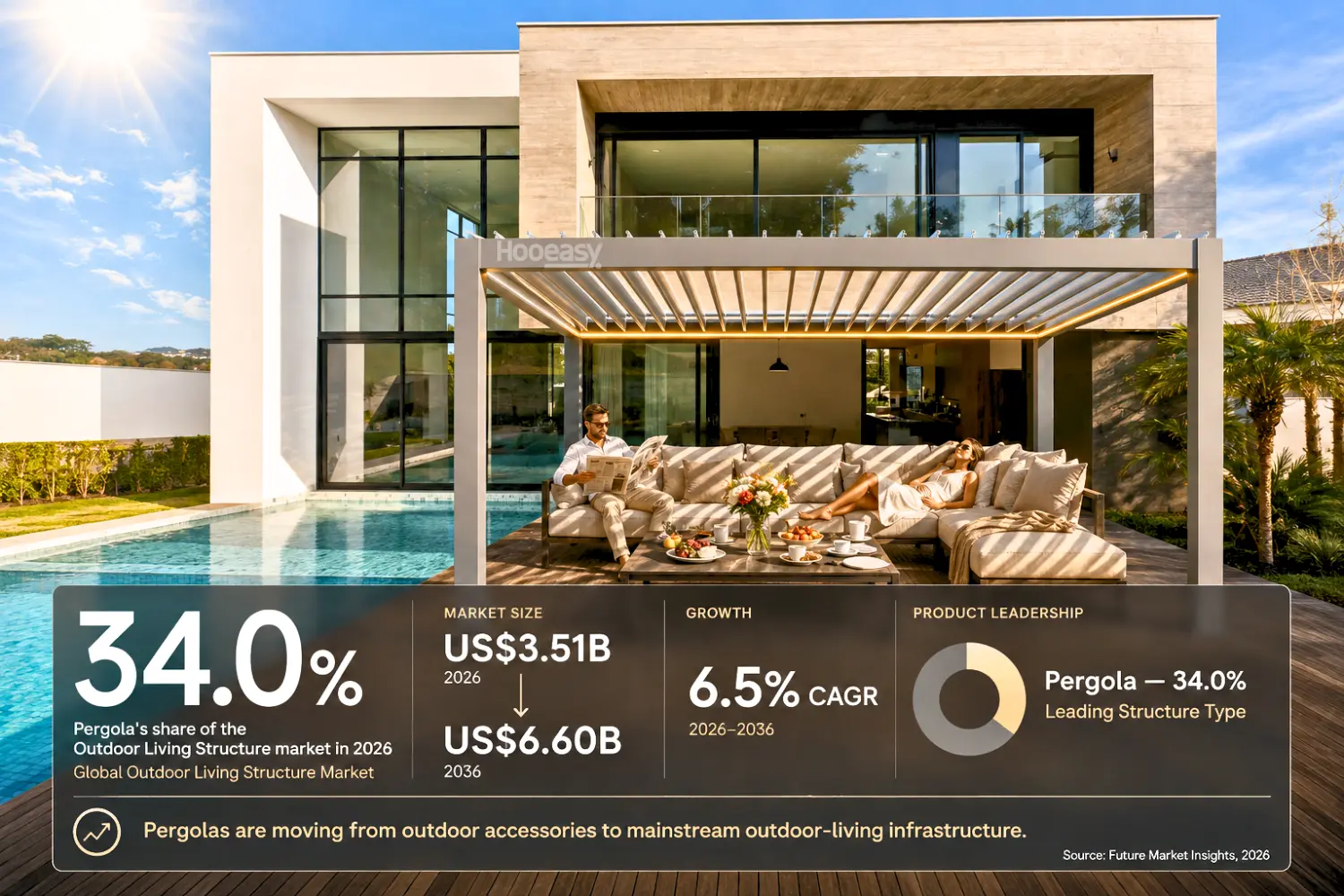
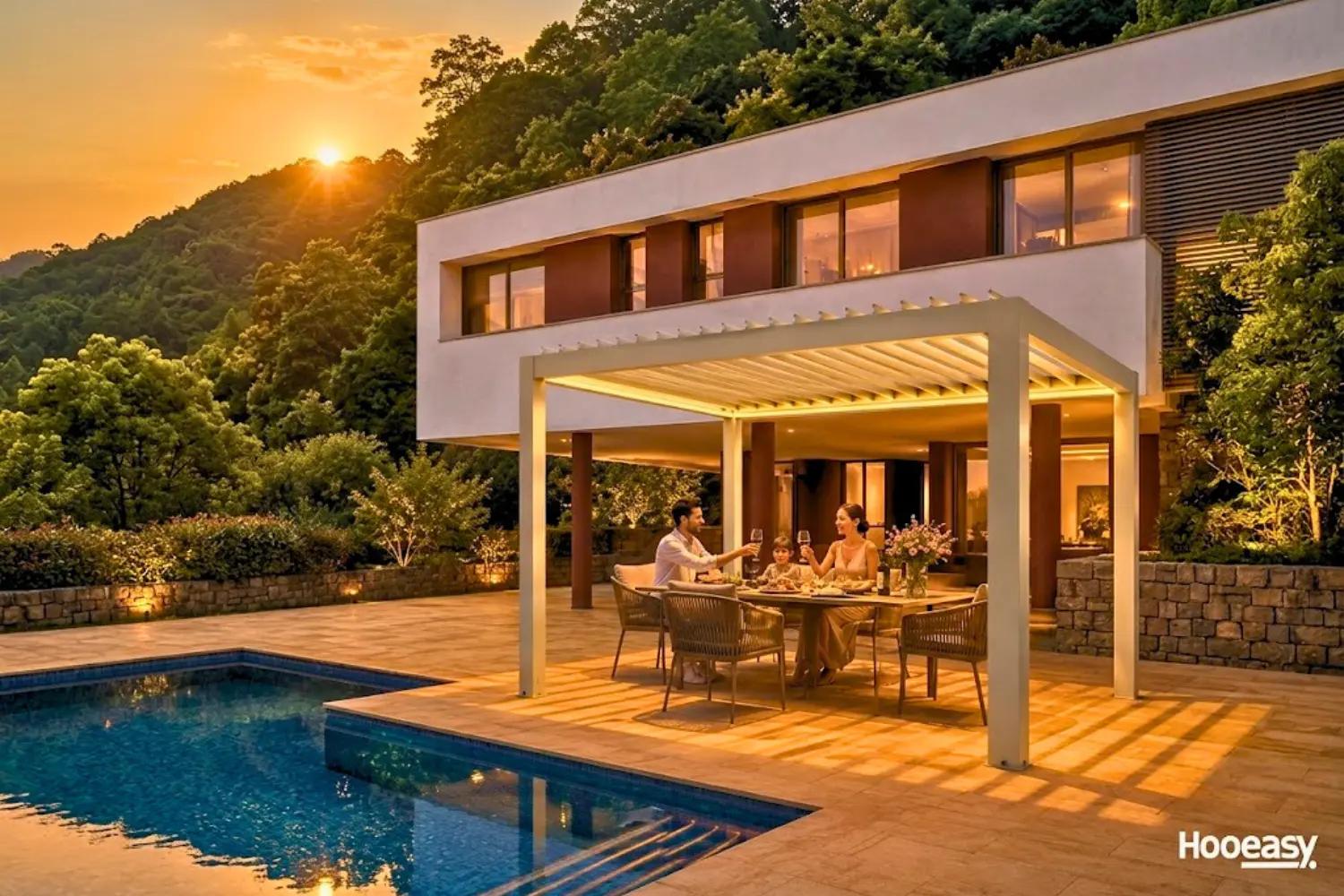
A well-designed pergola provides pergola shade that can transform an outdoor space from unusable to essential. How pergolas provide shade is not just about blocking sunlight—it is about creating a comfortable microclimate where people can gather, dine, relax, and connect.
Hooeasy Pergola supports a wide range of spaces:
- Residential — patios, gardens, pools, terraces
- Hospitality — hotels, resorts, restaurants
- Commercial — shopping centers, mixed-use developments, office campuses
- Public & Community — outdoor gathering spaces, recreational areas
Whether you are looking for the best shade structures for outdoor spaces for a residential backyard or a commercial terrace, the pergola offers a versatile, architecturally integrated solution.
From Outdoor Space to Outdoor Wellness
The progression is simple and powerful:
Outdoor Living → Outdoor Comfort → Shade → Longer Outdoor Stay → Social Connection + Activity + Relaxation → Outdoor Well-being
At Hooeasy, we don’t just design shade. We help create outdoor spaces people can actually live in.
How to make outdoor spaces cooler is not just a technical question—it is a human one. It is about designing environments that support health, connection, and quality of life in an era of rising temperatures.
The Future of Outdoor Design Is Heat-Resilient
As extreme heat becomes a recurring reality, outdoor design will need to move beyond aesthetics. The future of outdoor spaces requires simultaneous attention to:
- Comfort
- Health
- Accessibility
- Climate resilience
- Usability
- Aesthetics
- Business performance
Shade is no longer simply an accessory to outdoor living. It is becoming part of the infrastructure that makes outdoor living possible.
Pergolas are one of the tools designers can use to build that infrastructure.
Understanding why shade is important during heatwaves is the first step. Understanding how to integrate shade into climate-resilient outdoor spaces is the next. And choosing the right outdoor shade solution—whether for residential, hospitality, or commercial applications—is the final piece.
The health benefits of shaded outdoor spaces are clear. The question is whether we will design our outdoor environments to deliver those benefits—or leave people exposed to the growing dangers of extreme heat.
How to protect outdoor spaces from extreme heat starts with recognizing that shade is not an amenity. It is a necessity.
Learn more about heat-resilient outdoor design and explore pergola solutions for your next project. Visit Hooeasy to discover how we help create outdoor spaces that stay usable in the heat. For project-specific inquiries, explore our pergola solutions or learn about our manufacturing capabilities. To discuss your next residential, hospitality, or commercial project, contact our team.
Design Outdoor Spaces That Stay Usable in the Heat
Looking for a pergola solution for your next residential, hospitality, or commercial project?
- For Architects & Designers — Explore design solutions that integrate shade seamlessly into your projects.
- For Distributors & Building Material Suppliers — Become a Hooeasy partner.
- For Project Developers & Contractors — Discuss your project requirements with our team.
The heat is not going away. But with the right design, our outdoor spaces don’t have to become unusable. Shade for heatwaves is not a luxury—it is the infrastructure of a livable future.