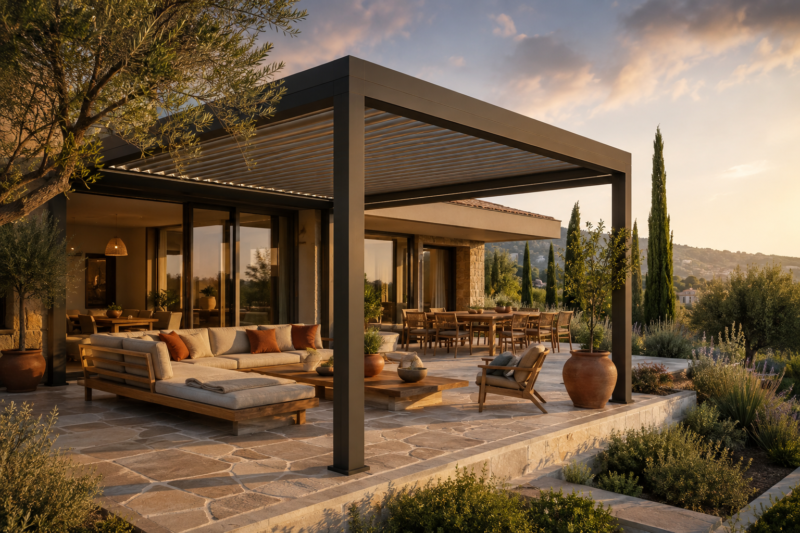

Outdoor living spaces have become more than just a trend—they are now a strategic investment for both residential and commercial environments. From hotel terraces and restaurant patios to private gardens and rooftop lounges, pergolas play a key role in creating functional, comfortable, and visually appealing spaces.
Yet despite their popularity, many projects fall short of expectations.
You may have seen it before: a pergola that looks impressive at first but begins to show issues within months—unstable structures, water leakage, fading finishes, or frustrated end users. These problems often lead to costly rework, delayed timelines, and even client complaints.
The reality is simple: most pergola mistakes don’t happen during installation—they start much earlier, during planning and design decisions.
Why Pergola Projects Fail More Often Than You Think
As demand for outdoor structures continues to rise, so does the number of underperforming projects. This is especially true in commercial applications, where expectations for durability, aesthetics, and functionality are significantly higher.
For contractors, developers, and distributors, the stakes are even greater. A poorly executed pergola project doesn’t just affect one installation—it can impact reputation, client trust, and long-term business opportunities.
The most common challenges include:
- Structural instability due to poor engineering
- Complex installation processes that increase labor costs
- Material degradation caused by weather exposure
- Inefficient shading that fails to deliver comfort
- Compliance issues in regulated markets
At the core of these challenges are mistakes when building a pergola—decisions made without fully understanding environmental conditions, user needs, or technical requirements.
Understanding these pitfalls is the first step toward avoiding them.
Top 10 Common Pergola Mistakes (And How to Avoid Them)
Below is a detailed breakdown of the most frequent pergola design mistakes and pergola installation mistakes, along with practical solutions and expert insights.
- Choosing the Wrong Material for Climate Conditions
Selecting materials based solely on appearance or cost is one of the most common errors.
Mistake
Ignoring climate factors such as humidity, rainfall, UV exposure, and temperature fluctuations.
Risk
Wood may crack, warp, or rot over time, while untreated metals can corrode. This leads to higher maintenance costs and shorter product lifespan.
Solution
Opt for weather-resistant materials like aluminum alloy, which offers durability, corrosion resistance, and minimal maintenance.
Pro Tip
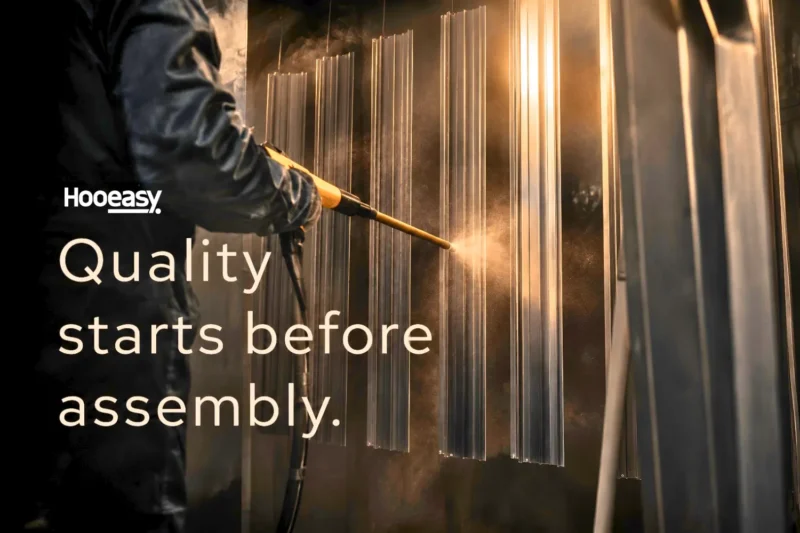
Hooeasy uses high-quality aluminum with advanced surface treatments and European-standard certifications, ensuring long-term performance across diverse climates.

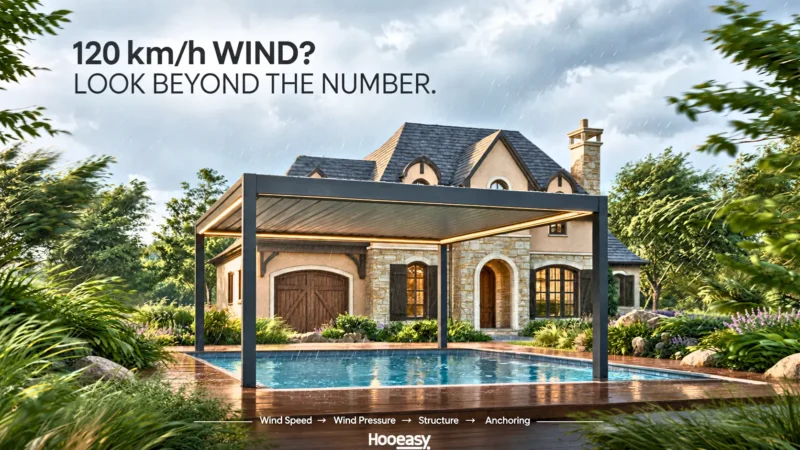
- Ignoring Wind Resistance Requirements
Wind load is often underestimated, especially in coastal or open areas.
Mistake
Failing to evaluate wind conditions during the design phase.
Risk
Structural instability or even collapse in strong winds, posing safety risks and liability concerns.
Solution
Choose pergolas that are engineered and tested for wind resistance, and ensure proper anchoring systems are in place.
Pro Tip
Hooeasy pergolas are designed to withstand wind speeds of 118–133 km/h, making them reliable for demanding environments.
- Poor Drainage Design
Water management is critical but frequently overlooked.
Mistake
Not integrating an effective drainage system.
Risk
Water accumulation can damage the structure, cause leakage, and reduce customer satisfaction—especially in high-end projects.
Solution
Incorporate concealed drainage systems that efficiently channel water away from the structure.
Pro Tip
Hooeasy integrates hidden drainage systems that maintain a clean appearance while enhancing functionality.

- Incorrect Size and Layout Planning
A pergola must fit both the space and its intended use.
Mistake
Choosing standard sizes without considering site-specific requirements.
Risk
Insufficient shading, poor space utilization, or imbalance in overall design.
Solution
Conduct proper site analysis and customize dimensions accordingly.
Pro Tip
With strong OEM/ODM capabilities, Hooeasy provides custom design support to match exact project needs.
- Overlooking Sun Orientation and Shading Efficiency
A pergola should do more than look good—it should provide real comfort.
Mistake
Ignoring how sunlight moves throughout the day.
Risk
Ineffective shading, resulting in overheated spaces that reduce usability.
Solution
Design with sun orientation in mind and use adjustable shading systems.
Pro Tip
Advanced louver systems can reduce heat by 40–60%, significantly improving user comfort.

- Complicated Installation Process
Installation challenges are a major concern for B2B buyers.
Mistake
Using designs that require complex assembly or specialized labor.
Risk
Delays, increased costs, and frequent pergola installation problems how to avoid pergola failure becomes a pressing issue.
Solution
Choose modular systems that simplify installation.
Pro Tip
Hooeasy offers easy installation systems with pre-engineered components that reduce time and effort on-site.
- Lack of Smart Features (Automation / IoT)
Modern outdoor spaces demand more than static structures.
Mistake
Ignoring automation and smart technology integration.
Risk
Reduced competitiveness and missed opportunities for premium pricing.
Solution
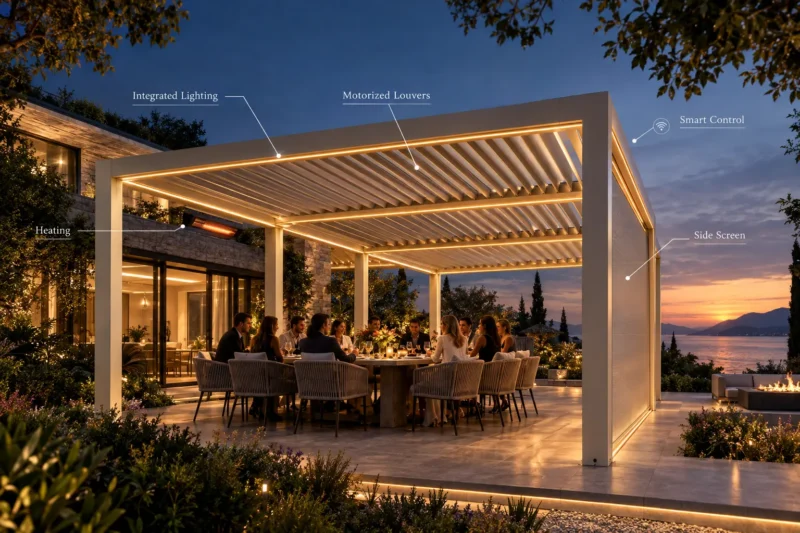
Incorporate features like motorized louvers, rain sensors, and remote controls.
Pro Tip
Smart pergola systems enhance both functionality and user experience, especially in commercial settings.
- Ignoring Local Compliance and Certification
Regulatory requirements vary across markets.
Mistake
Overlooking necessary certifications.
Risk
Project delays, legal issues, or inability to enter certain markets.
Solution
Ensure all products meet local and international standards.
Pro Tip
Hooeasy products comply with CE, ROHS, BSCI, and ISO certifications, making them suitable for global distribution.
- Poor Fabric or Finish Quality
Aesthetics matter—especially in premium projects.
Mistake
Using low-quality coatings or fabrics.
Risk
Fading, peeling, or aging that affects appearance and durability.
Solution
Choose UV-resistant finishes and high-quality materials.
Pro Tip
Hooeasy offers over 100 design options with trend-driven, long-lasting finishes.
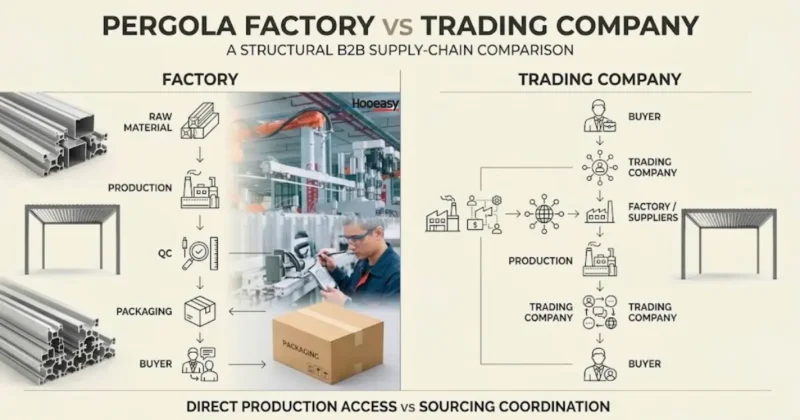
- Choosing the Wrong Supplier
Perhaps the most critical decision of all.
Mistake
Prioritizing low cost over reliability and expertise.
Risk
Inconsistent quality, lack of support, and increased likelihood of pergola installation mistakes.
Solution
Partner with experienced manufacturers who understand both product and project requirements.
Pro Tip
A strong supplier helps prevent pergola design mistakes before they happen.

Why Choosing the Right Pergola Supplier Matters More Than You Think
After reviewing these common issues, a clear pattern emerges: most problems originate from early decisions—especially supplier selection.
A professional supplier doesn’t just deliver products. They influence design feasibility, installation efficiency, and long-term performance.
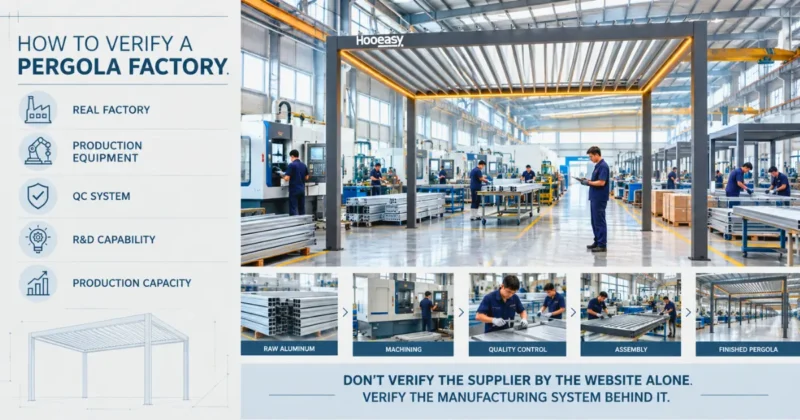
Hooeasy, for example, operates a 152,000㎡ manufacturing facility and serves clients worldwide. Their ability to provide OEM and ODM solutions allows projects to be tailored to specific requirements, while strict quality control ensures consistency at every stage.
Choosing the right partner means fewer risks, smoother execution, and better outcomes.
How Hooeasy Helps You Avoid These Pergola Mistakes
Instead of addressing problems after they occur, Hooeasy focuses on prevention through better design, engineering, and support.
✔ Engineering-tested structures for safety and durability
✔ Certified materials (CE, ROHS, BSCI) for global compliance
✔ Custom design support tailored to real project scenarios
✔ Easy installation systems that reduce complexity
✔ Smart shading integration for modern outdoor living
Each of these advantages directly addresses the most common causes of failure—turning potential risks into reliable solutions.
To explore more, visit:https://www.hooeasy.com/.
Planning a Pergola Project? Let’s Get It Right from the Start
Avoiding pergola mistakes is not just about reducing costs—it’s about delivering quality, reliability, and long-term value.
Whether you’re a contractor, developer, or distributor, the right approach from the beginning can save time, protect your reputation, and improve client satisfaction.
If you’re planning a project, consider taking the next step:
- Get a free consultation
- Request a product catalog
- Connect with project experts
Because when it comes to pergolas, getting it right the first time makes all the difference.
Real-World Lessons: What Successful Pergola Projects Do Differently
Understanding pergola mistakes is important—but seeing how successful projects avoid them provides even more practical value. Across global markets, high-performing pergola installations tend to follow a few consistent principles, regardless of project size or location.
First, they prioritize planning over speed. Instead of rushing into production or installation, experienced contractors invest time in evaluating site conditions, climate impact, and user behavior. This early-stage clarity significantly reduces pergola installation mistakes later on.
Second, they treat pergolas as engineered structures—not decorative add-ons. This means considering load calculations, wind resistance, drainage, and long-term material performance from the beginning. Many pergola design mistakes happen when aesthetics are prioritized over structural integrity.
Third, successful projects embrace adaptability. Whether it’s adjustable louvers, modular configurations, or integrated lighting and automation, flexibility allows the pergola to meet evolving user needs—especially in commercial environments.
Finally, they rely on collaboration. Instead of working in isolation, project teams partner with manufacturers who can provide technical input, design optimization, and installation guidance. This is particularly important for large-scale or custom builds.